Quick answer: Preservative free food is food with no added preservatives such as sodium benzoate or sulphites. Instead, it stays safe through other methods, for example a fridge, freezing, drying or heat sterilisation such as the retort process. Permitted preservatives, on the other hand, are legal and safe when makers use them within legal limits.
You see “no preservatives” on more and more labels. Many parents and young shoppers look for it, because it sounds simpler. However, many people are also confused. For example, are preservatives harmful? And how can food last without them? This guide explains the basic facts fairly, without scaring anyone.
What is a food preservative?
A preservative is an additive that slows down food spoilage. According to the World Health Organization (WHO), preservatives slow decay caused by mould, air, bacteria and yeast. They also help limit contamination that can cause foodborne illness, including botulism.
Common examples include benzoic acid and its salts, sorbic acid and its salts, and sulphur dioxide and sulphites. Makers often use them in bottled sauces, drinks, jams and food that stays at room temperature after opening.
Why makers use preservatives
- To extend shelf life in shops and at home
- Also, to cut food waste
- To keep food safe when people open and use it many times
- So products can travel far without a cold chain
Preservative rules in Malaysia
In Malaysia, the Food Regulations 1985, made under the Food Act 1983, control the use of preservatives. In particular, Regulation 20 covers preservatives. Makers may only use the preservatives listed in the Sixth Schedule, for specific types of food and within set maximum levels.
The Food Safety and Quality Programme of the Ministry of Health Malaysia (KKM) enforces these rules. In addition, the label must declare the additives used, including the functional class such as “preservative” plus its name or INS number.
At the international level, the Joint FAO/WHO Expert Committee on Food Additives (JECFA) assesses additives. WHO explains that this committee sets an acceptable daily intake (ADI), which is the amount a person can take every day over a lifetime without harm.
How preservative free food stays safe
Food spoils when microbes grow. Therefore, there are several ways to stop them without additives:
| Method | How it works | Needs chilling? |
|---|---|---|
| Fridge | Slows down germ growth | Yes |
| Freezing | Pauses germ growth for a while | Yes, a freezer |
| Drying | Removes the water that germs need | No, if dry and sealed |
| Sterilising in a sealed container | Heat kills germs, then the seal keeps new ones out | No, before opening |
Canned food and retort packs use the last method, so they keep without a fridge until opened. For a comparison, read our guides on canned food and frozen vs retort food.
The retort process: long shelf life with no added preservatives
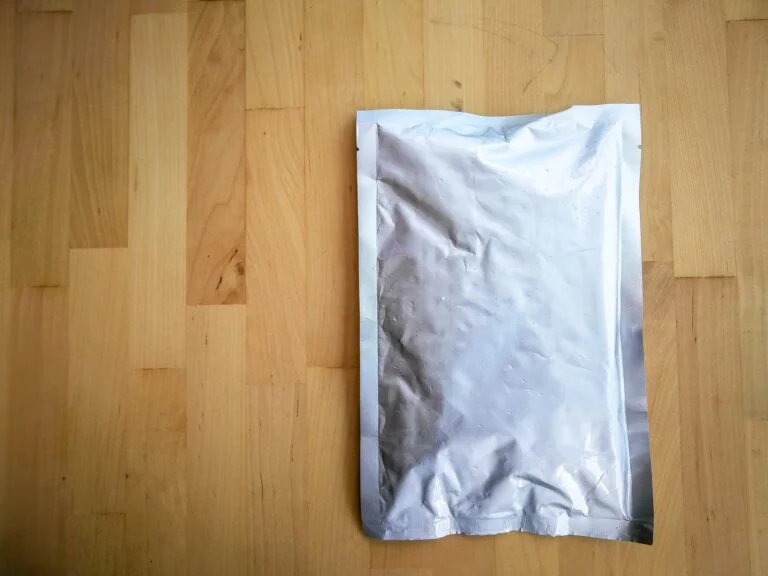
In the retort process, we cook the food, fill it into a pack and seal it. Then the pack goes through high heat under pressure until it is commercially sterile. Because the heat destroys the germs and the seal stays tight, the food keeps at room temperature with no added preservatives. For details, read our guides on the retort pouch and retort food.
How to read a preservative free food label
Do not rely on the big words on the front of the pack. Instead, check these parts:
- Ingredient list. Look for the word “preservative” or an INS number in brackets.
- Storage directions. Products without preservatives often need chilling, unless they went through sterilisation in a sealed container.
- Expiry date. A short shelf life is normal for fresh products without preservatives, so do not worry about it.
- After opening. Most products need chilling, and you should finish them within a few days once open.
If you run a food business, our guide on food labelling in Malaysia explains the label rules.
Preservative free options in your kitchen
You do not need to replace everything in your kitchen. For example, easy options include:
- Fresh vegetables and fruit, kept in the fridge
- Rice, dried beans and dried spices in sealed containers
- Home cooking, chilled or frozen in clean containers
- Canned or retort food whose ingredient list has no preservatives
Then check the label each time you buy a new brand, because recipes can change. For long term stock, our long lasting food guide has a fuller list.
Myths about preservative free food
Myth: preservative free food never spoils.
Fact: it can still spoil if you store it the wrong way. So follow the label.
Myth: all long lasting food is full of preservatives.
Fact: canned food and retort packs last because of heat sterilisation and a sealed container.
Myth: all preservatives are harmful.
Fact: permitted preservatives have gone through assessment, and the law limits them. However, if you have an allergy or sensitivity, check the label and ask your doctor.
MakanHubb food with no added preservatives
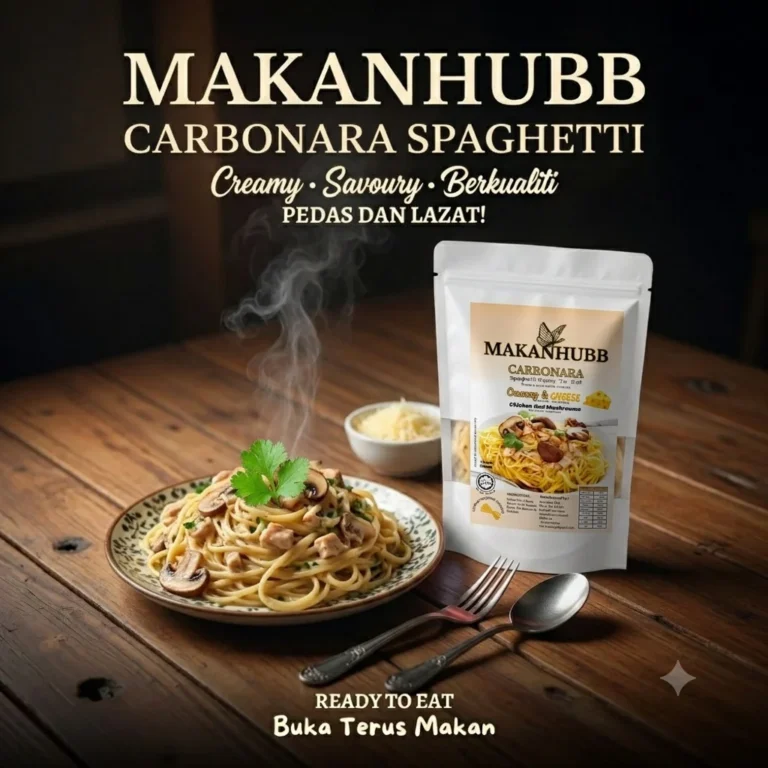
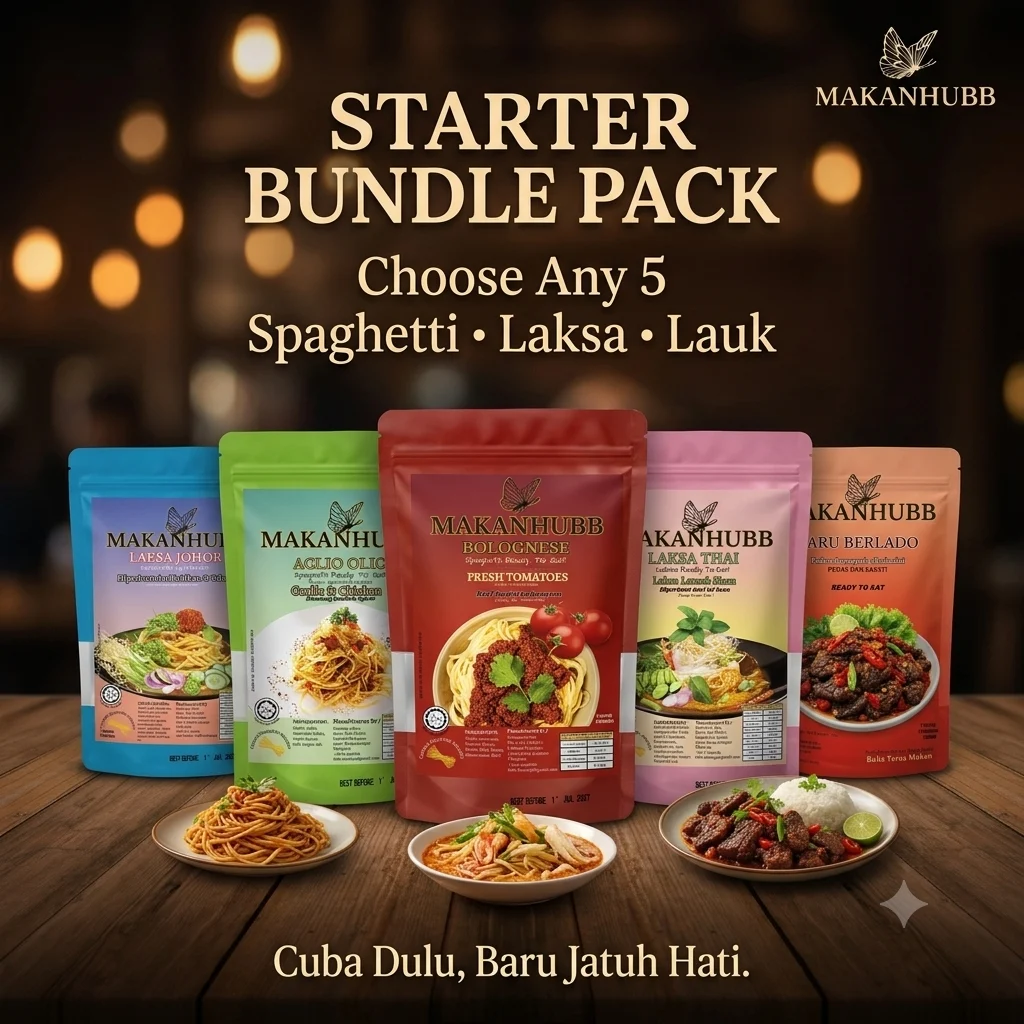
We cook MakanHubb dishes and pasta, fill them into retort packs, and then sterilise them in our kitchen in Wangsa Melawati. We do not add preservatives, because the heat and the seal keep the food safe. The packs need no fridge and keep for 1 to 2 years before opening. You can eat straight from the pack, or warm the sealed pack in hot water for a few minutes. Prices start from RM12.90 a pack.
We explain how to warm these packs in our guide on how to heat retort food.
FAQ about preservative free food
Is preservative free food healthier?
Not always. Nutrition depends on the ingredients, the cooking and the portion size. Also, permitted preservatives are safe within the set limits.
Why does food without preservatives spoil faster?
Without preservatives, germs grow more easily if the food is not chilled or sterilised. That is why you should follow the storage directions.
How does retort food last without preservatives?
It goes through heat sterilisation after sealing. The heat destroys germs, and the pack keeps new ones out as long as it stays intact.
Who controls preservatives in Malaysia?
The Ministry of Health Malaysia, through the Food Regulations 1985 under the Food Act 1983.
Does a retort pack need a fridge after opening?
Yes. Move leftovers to a clean container, keep them in the fridge, and finish them within a few days.
Still have questions?
WhatsApp the MakanHubb team at 012-540 0263. We reply during office hours, Monday to Friday.