Quick answer: Canned food and retort pouch food both go through heat treatment that kills germs, so you can store both at room temperature without a fridge. Cans are sturdier and usually last longer. However, retort pouches are lighter, open without a can opener and warm up quickly in hot water.
Many Malaysian homes keep sardines, tuna or chicken curry in cans as pantry stock. Retort pouch meals are also easier to find now. So which one should you buy? This guide compares both options fairly, including shelf life, safety, weight and storage.
If you are just starting a pantry, also read our guides on long lasting food and retort food shelf life.
What is canned food?
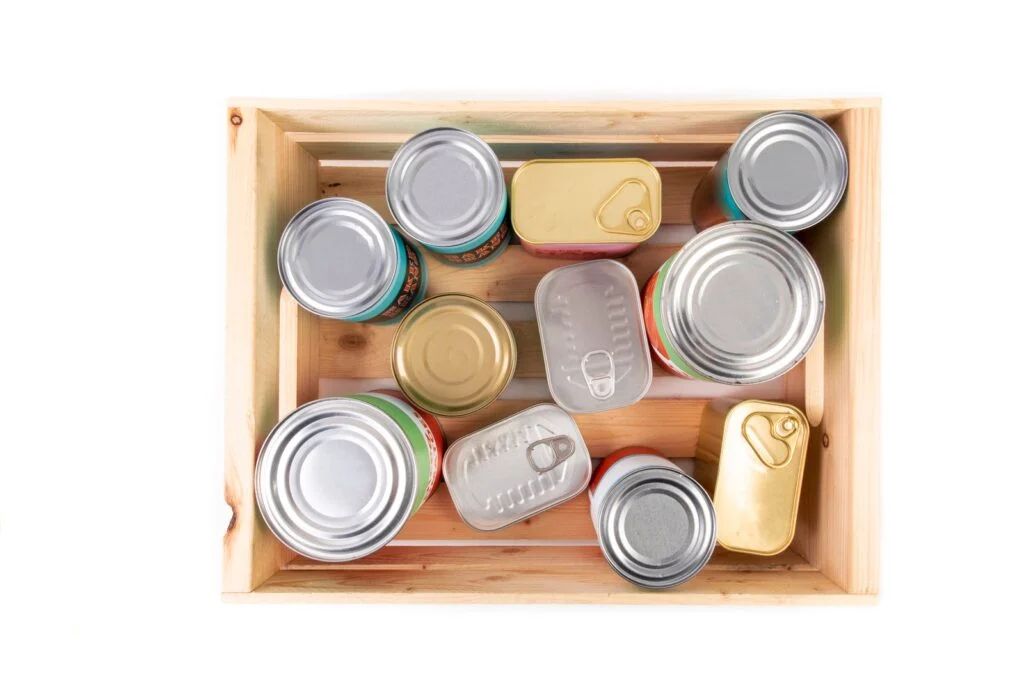
Manufacturers fill a metal can with food, seal it, and then heat it to a high temperature. This step is called commercial sterilisation. As a result, it kills the bacteria that spoil food, including the bacteria behind botulism.
After that, you can keep the can in a normal cupboard. Common examples in Malaysia include sardines, tuna, baked beans, corn, fruit in syrup and canned curry.
What is retort pouch food?
The idea is almost the same, but the container is a soft, layered pouch instead of a metal can. Factories fill and seal the pouch, then heat it in a retort machine.
According to the USDA Food Safety and Inspection Service (FSIS), retort packaging is shelf stable at room temperature. In addition, FSIS says commercial sterilisation happens above 100 degrees Celsius, typically around 115 to 121 degrees Celsius. Our retort food guide explains the process in more detail.
Canned food vs retort pouch at a glance
| Point | Can | Retort pouch |
|---|---|---|
| Process | Heat sterilised in a sealed container | Same idea, in a retort machine |
| Shelf life | Low acid 2 to 5 years, high acid 12 to 18 months (USDA FSIS) | Check the label, often around 1 to 2 years |
| Container weight | Heavier | Light and thin |
| Opening | Needs a can opener unless ring pull | Tear at the notch or cut with scissors |
| Warming | Pour into a pot or bowl | Soak the sealed pouch in hot water |
| Toughness | Strong, handles pressure | Sharp objects can puncture it |
| Waste | Many centres accept metal cans for recycling | Layered pouches are harder to recycle |
Neither option wins on every point. So choose based on how you will use it.
Advantages of canned food
- Long shelf life. USDA FSIS estimates 2 to 5 years for low acid foods such as meat and beans.
- Sturdy. Cans rarely break, even when stacked high or dropped.
- Wide choice. Grocery shops across Malaysia carry many brands and price points.
- Recyclable. Many recycling centres take metal cans.
Advantages of retort pouches
- Light. Good for emergency bags, camping and travel.
- Easy to open. You do not need a can opener.
- Quick to warm. Because the pouch is thin, it heats through in hot water within a few minutes.
- Complete dishes. Many retort products are cooked dishes or rice, not raw ingredients.
That said, we do not claim retort pouches are more nutritious than cans. Nutrition depends on the recipe, so check the label of each product.
Canned food safety: signs you should throw it out
USDA FSIS advises shoppers to avoid cans that are bulging, rusted, leaking or deeply dented. Also, throw away any can with a deep dent on a seam.
Surface rust that rubs off with your finger or a paper towel is not serious. On the other hand, you should discard a swollen can straight away.
The same rule applies to retort pouches. For example, do not eat from a pouch that is swollen, leaking, punctured or smells odd.
How to store cans and pouches
- Keep them cool and dry. USDA FSIS says temperatures below 29 degrees Celsius are best, while heat above 38 degrees Celsius harms canned goods.
- Avoid the stove and sink. This matters because heat and damp speed up spoilage.
- Rotate by date. Put new stock at the back and older stock in front.
- Refrigerate after opening. Move leftovers into a covered container and finish them within a few days.
Malaysian homes can get hot in the afternoon. Therefore, avoid keeping stock in a car boot or a sunny storeroom.
When to pick a can and when to pick a pouch
Long term home pantry
Cans suit ingredients such as sardines, tuna and beans that you will cook again. In addition, they stack well on a shelf.
Emergency bags and travel
Pouches are more practical because they are light and need no opener. Our flood emergency kit guide lists the other items to pack.
Busy days at home or the office
A cooked dish in a pouch is ready to eat or warm briefly. If you often reach for fast food because you lack time, see our convenience food guide.
For a comparison with the freezer, read our frozen vs retort food guide.
MakanHubb retort dishes as part of your pantry
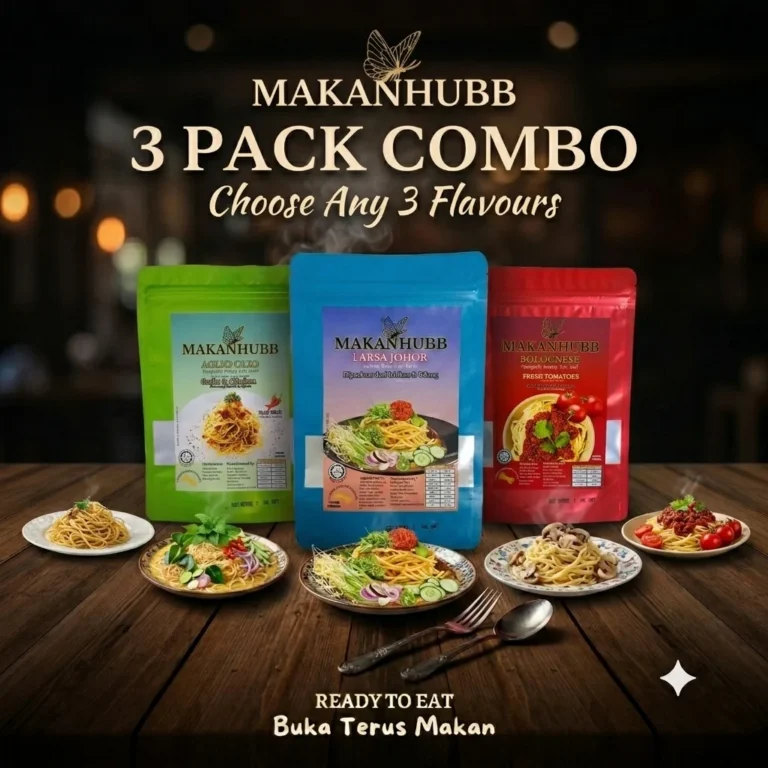
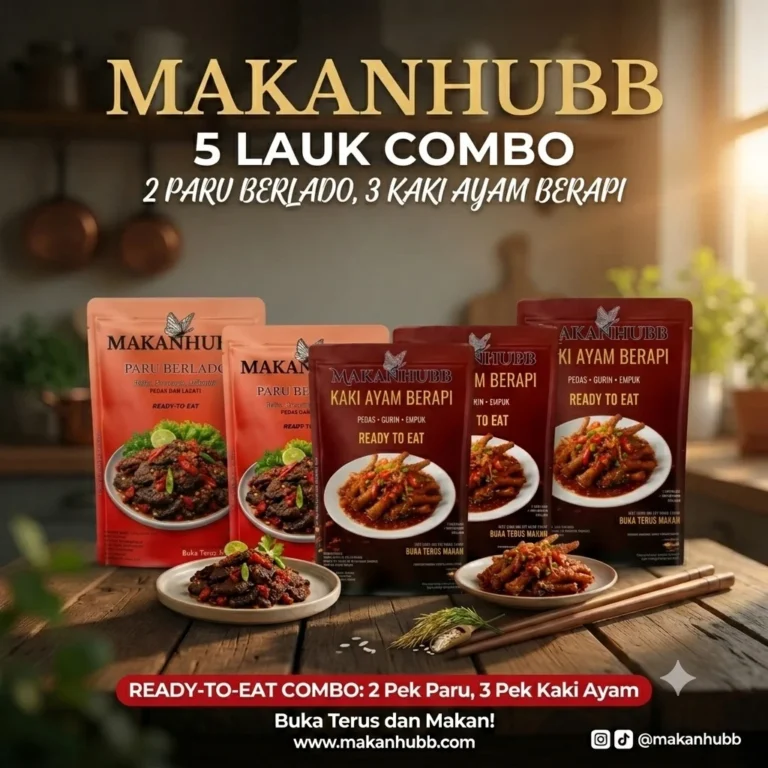
MakanHubb makes dishes, pasta and white rice in retort pouches. They need no fridge and keep for about 1 to 2 years before opening. Then you can eat straight from the pack or soak the pouch in hot water for a few minutes.
Many customers therefore keep both: cans for cooking ingredients, and pouches for ready meals. Prices start from RM12.90 a pack.
Tips for buying long lasting stock
- Check the expiry date and the container before you pay.
- Then buy only what your family actually eats.
- Write the purchase date on each item with a marker.
- Mix cans and pouches so your stock does not rely on one type.
- Keep a manual can opener in the pantry as well.
FAQ about canned food
Is canned food safe after the expiry date?
Follow the date on the label as your main guide. However, if a can is swollen, leaking or smells odd, throw it out even before that date.
How long does canned food last?
USDA FSIS estimates 2 to 5 years for low acid foods and 12 to 18 months for high acid foods such as tomatoes and fruit.
Which lasts longer, a can or a retort pouch?
Cans usually have the longer shelf life. By comparison, MakanHubb retort pouches keep for about 1 to 2 years before opening.
Can I heat a can directly on the stove?
It is safer to pour the food into a pot or bowl first. For a retort pouch, soak the sealed pouch in hot water instead.
Do I need to refrigerate leftovers after opening?
Yes. Move them into a covered container, keep them in the fridge and finish them within a few days.
Still have questions?
WhatsApp the MakanHubb team at 012-540 0263. We reply during office hours, Monday to Friday.