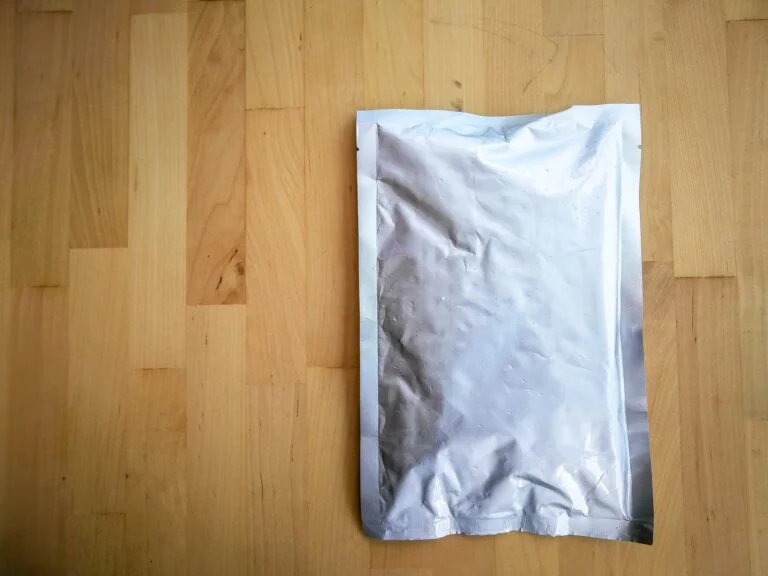
Quick answer: Retort food is food that is cooked, sealed in a pouch or can, and then sterilised with high heat and pressure (around 121 degrees Celsius). The process kills the bacteria that cause spoilage, so the food can be kept at room temperature for 1 to 2 years without added preservatives and without a fridge.
This guide explains what retort is, how it is made step by step, why it is safe, and what you should check before you buy. We wrote it from our own experience retorting pasta, laksa and other dishes every week in the MakanHubb kitchen in Wangsa Melawati.
What is retort food?
The word “retort” refers to the machine used, which is a large pressure vessel that heats the food after it has been sealed. The idea is the same as canned food. The difference is that most retort products today are packed in a retort pouch, a soft layered pack that is lighter and heats up faster than a can.
It counts as ready-to-eat food. It is fully cooked when it is packed. You only need to heat it up, or eat it straight from the pack.
Retort vs canned, frozen and vacuum-packed food
| Method | Needs a fridge? | Typical shelf life | Notes |
|---|---|---|---|
| Retort pouch | No | 1 to 2 years | Light, heats up fast |
| Can | No | 2 years or more | Heavy, needs a can opener |
| Frozen | Yes, freezer | A few months | Spoils if the cold chain breaks |
| Vacuum only | Yes, usually | A few days to weeks | Vacuum does not sterilise food |
Many people mix up vacuum packs and retort. A vacuum pack only removes the air. Without sterilisation, the bacteria are still alive and the food still has to be kept cold.
How retort food is made
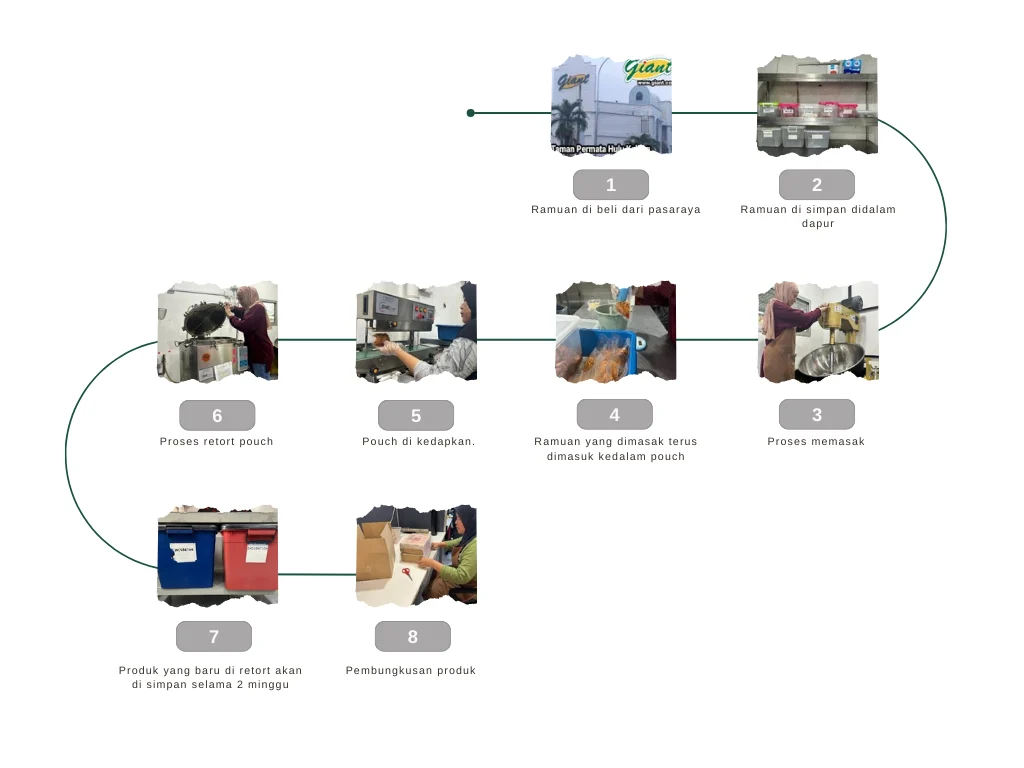
Every factory has its own SOP, but the basic flow is much the same. This is the process we follow at MakanHubb.
- Choose and store the raw ingredients. Ingredients are kept at the right temperature before cooking.
- Cook. The recipe is cooked as usual, but the taste and texture are adjusted because the food will be heated again in the machine.
- Fill the pouch. Each pack is weighed so the heat reaches the centre of the food evenly.
- Seal. The mouth of the pouch is heat sealed. A poor seal is the main cause of leaking packs.
- Sterilise in the retort machine. We use 121 degrees Celsius at a pressure of around 1.5 bar, with a capacity of up to 110 packs per cycle.
- Cool and dry. Packs are cooled in a controlled way so they do not swell or burst.
- Quarantine and incubation. Every batch is held for 7 days and checked for swelling, leaks and smell before it is sold.
- Label and pack. The manufacturing date and expiry date are printed on every pack.
Small producers often skip step 7. This is the step that catches a problem batch before it reaches the customer.
Why retort food lasts long and stays safe
Food spoils because bacteria, yeast and mould grow in it. A fridge only slows that growth down. The retort process kills these microorganisms and seals the pack so nothing new can get in.
For low-acid foods such as curries, dishes and sauces, the main target of the retort process is Clostridium botulinum spores. These spores survive normal cooking heat, so temperatures above boiling point are needed. That is why retort machines use pressure, because water and steam can reach temperatures above 100 degrees Celsius when they are under pressure.
Internationally, the heat process requirements for low-acid foods in sealed containers are set out in regulations such as 21 CFR Part 113 (US FDA). Serious producers validate the process time and temperature for every recipe instead of guessing.
Pros and cons of retort food
Pros
- No fridge needed, so it suits home stock, the office, hostels and travel
- Lasts 1 to 2 years at room temperature
- Does not need added preservatives
- Already cooked, so you only heat it or eat it as it is
- Pouches are light and do not break like glass jars
Cons
- Vegetables and pasta are softer than when freshly cooked
- The taste changes slightly because the food is heated twice
- Not every food is suitable, for example crispy or fried food
- Processing costs more than fresh food
How to eat and heat retort food
Pick a method based on what you have around you:
- Hot water: soak the sealed pack in hot water for 5 to 10 minutes.
- Microwave: empty the contents into a microwave-safe container and heat for about 20 seconds. Do not put an aluminium pouch in the microwave.
- Pan: pour it into a pan and heat for about 1 minute.
- Straight from the pack: all MakanHubb retort products are already cooked and can be eaten without heating.
Other ways to eat without a stove or microwave are covered in our guide to long lasting food.
How to choose a good product
Not every product in a pouch has been sterilised. Check these points before you buy:
- The label says it can be stored at room temperature. If the label tells you to keep it in the fridge, it is not a sterile retort product.
- There is a manufacturing date and an expiry date.
- The pack is not swollen. A puffed-up pack is a danger sign. Do not eat it.
- The seal is flat and does not leak.
- The producer can be identified. The name, address and contact details of the producer should be clear.
A fuller checklist is in our guide to ready to eat food.
Opportunities for food entrepreneurs
More and more food sellers, caterers and sambal entrepreneurs are moving to retort because their products can be shipped all over Malaysia without a cold chain. There are two routes:
- Buy your own machine. This suits large daily production. Read our guide to the retort machine for cost factors and premises requirements.
- Use a retort service. You cook, we retort. At MakanHubb the price is RM17.50 per kilo with a minimum charge of RM70. See the details on our retort service page.
Which dishes suit this process
Dishes with gravy or sauce are the easiest to retort because heat moves evenly through the liquid. Suitable examples:
- Curry, rendang, masak lemak and gulai
- Pasta sauces such as bolognese and carbonara
- Laksa broth, soups and porridge
- Sambal, wet serunding and coconut milk dishes
- White rice and pasta cooked with a controlled amount of water
Less suitable foods include battered fried food that needs to stay crispy, leafy vegetables that break down easily, and food so thick that heat struggles to reach the centre of the pack. The full list is on our retort service page.
Myths and facts about retort food
Myth: long-lasting food must be full of preservatives.
Fact: retort products last long because they are sterilised and sealed, not because of chemicals. The same principle has been used for canned food for more than a hundred years.
Myth: retort products have no nutrition.
Fact: some heat-sensitive vitamins do drop, the same as when food is cooked for a long time at home. Protein, carbohydrates and fat remain.
Myth: vacuum packs and retort are the same.
Fact: vacuum only removes air. Without sterilisation, vacuum-packed food still has to be kept cold and spoils quickly.
Myth: once you buy a machine, any food can be retorted.
Fact: every recipe has to be tested to find the right time and temperature. Pack size, thickness and oil content all make a difference.
FAQ about retort food
How long does retort food last?
Most of it lasts 1 to 2 years from the manufacturing date if the pack is not damaged. Check the expiry date on the pack. The full explanation is in our guide to retort food shelf life.
Does it contain preservatives?
The retort process does not need added preservatives because the food is sterilised with heat. Check the ingredient list on the label of each product to be sure.
Is retort the same as canned food?
The principle is the same: the food is sealed and then sterilised. The difference is the container. A pouch is lighter, thinner and heats up faster than a can.
Can I heat the pouch in the microwave?
No. Most retort pouches have an aluminium layer. Empty the contents into a microwave-safe container first.
Why are some packs swollen?
A swollen pack usually means the seal leaked or the process was not done properly, and bacteria are producing gas. Throw the pack away without opening it.
Can I keep it in the car?
Yes for short periods, but avoid very hot temperatures for long stretches because this can affect the taste and texture. Store it somewhere dry and shaded.
Is it suitable for children?
Yes, as long as the type of food suits the child’s age and spice tolerance. Choose non-spicy options such as carbonara or aglio olio.
Still have questions?
WhatsApp the MakanHubb team at 012-540 0263. We reply during office hours, Monday to Friday.