Quick answer: A food label in Malaysia for locally made products must be in Bahasa Malaysia. The basics include the name of the food, the ingredients in descending order of weight, an allergen statement, the net content, and the name and address of the producer. In addition, some food categories must carry an expiry date. These requirements come from the Food Regulations 1985 under KKM.
A tasty product alone is not enough to get into shops or sell online with confidence. Buyers, retailers and health officers look at the label first. So this guide explains what a food label in Malaysia should show, the common mistakes, and how to check a label before you print it.
Our main reference is the KKM Guideline on Labelling Requirement (2023). The document itself says it is not legally binding and that you should read it with the regulations. Therefore, check the latest regulation text or ask your health office before you print labels in bulk.
Why a food label in Malaysia matters for sellers
In short, a label is how a producer talks to the buyer. It tells people what is inside the pack, who made it and how to store it. For buyers with allergies, a correct label can also prevent a health problem.
Legally, packaged food falls under the Food Act 1983 and the Food Regulations 1985. In addition, an amendment to the labelling rules published in 2020 took effect on 1 January 2024, according to a USDA GAIN report. For example, the changes cover declaring the percentage of key ingredients and how you write food additives.
What a food label in Malaysia must show
| Item | What you need |
|---|---|
| Language | Bahasa Malaysia for food produced in Malaysia. You may add other languages if the meaning stays the same. |
| Name of the food | A clear name that reflects the true nature of the product. |
| Ingredient list | In descending order of weight. State the source of oils and any animal ingredients. |
| Allergen statement | Sources such as cereals with gluten, nuts, fish, milk and eggs. |
| Net content | The minimum weight, volume or number of units. |
| Producer | Name and address of the local manufacturer or packer. |
| Beef or pork | A statement if the food contains beef, pork, their derivatives or lard. |
Ingredients and the percentage of key ingredients
First, list every ingredient, including those inside the sauces or seasonings you buy. Also, if the label highlights an ingredient, such as “prawn sambal” or a large prawn picture, you must declare its percentage. People call this rule QUID.
Allergens and cross-contamination
The KKM guideline asks you to show allergen sources in the ingredient list, including those in compound ingredients and additives. Besides that, you should state any possible cross-contamination. For instance, a kitchen that also processes peanuts should print a suitable warning.
Dates on the label
Not every food needs an expiry date. Instead, the regulations list certain categories, such as bread, biscuits, chocolate, pasteurised juice and sauces. For these, you write the date with the prescribed words in bold capital letters of at least 6 point.
Even if your product is not on the list, printing a manufacture date and an expiry date is still good practice. As a result, buyers feel more confident, and you manage stock more easily.
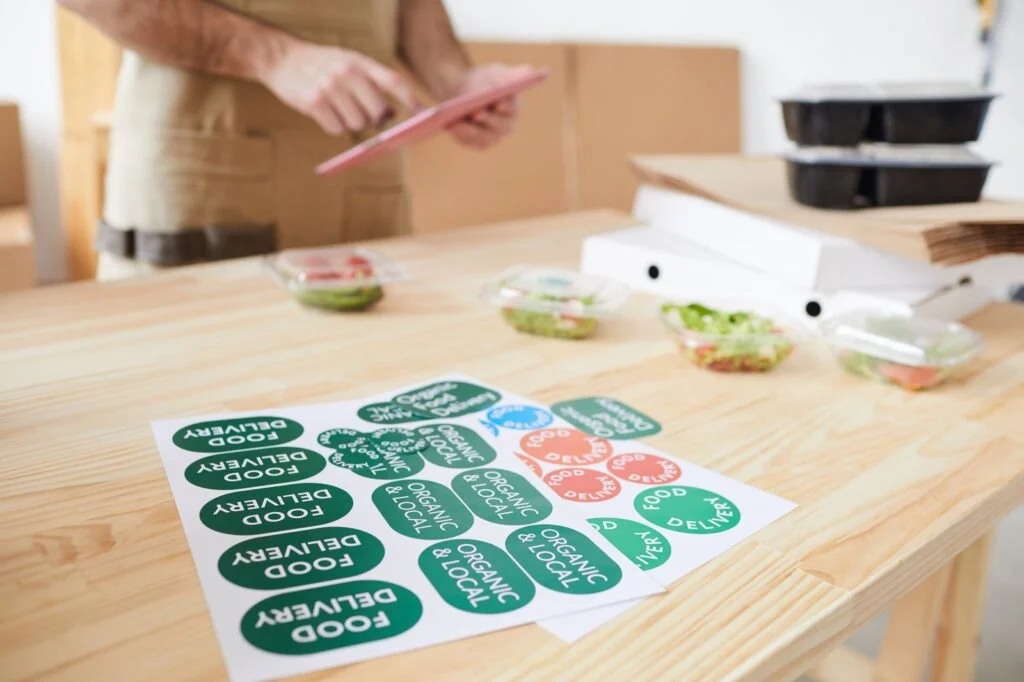
A sample layout for a jar of sambal
For example, imagine you sell prawn sambal in jars and need a food label for Malaysia shops. On the front, put the product name and net content. Then arrange the other details neatly on the back:
- The ingredient list, for example dried chilli, shallots, dried prawns, palm oil, sugar and salt.
- The percentage of dried prawns, because the name highlights prawns.
- Allergens: contains crustaceans (prawns).
- Storage directions before and after opening.
- Manufacture date, expiry date, batch number, and the producer’s name and address.
However, this sample is only an illustration. Your ingredients and percentages must follow your actual recipe.
Common food label mistakes in Malaysia
- No full address. A brand name alone is not enough on a food label in Malaysia.
- Incomplete ingredients. Sellers often leave out what is inside soy sauce, sauces or seasoning powder.
- Misleading pictures. The guideline says pictures may only show ingredients that the product really contains.
- A logo without a certificate. Do not print any certification logo, including a halal logo, without a valid certificate.
- Praise words. The rules also limit terms such as “premium” or “pure” unless the product meets set criteria.
- English only. Local products need the details in Bahasa Malaysia.
Labels for retort and frozen products
Frozen products need clear storage directions, for example “keep frozen”. Also add heating directions, because buyers want to know the best way to enjoy the food. Our frozen food business guide covers what else to prepare.
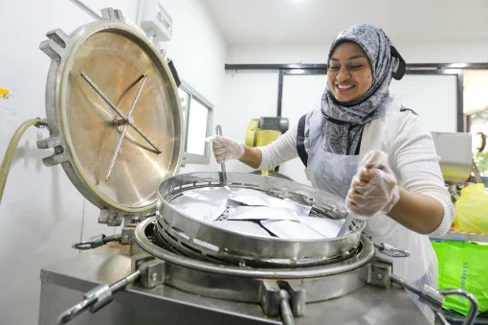
Retort products, on the other hand, keep at room temperature before opening. Even so, the label should still say how to store the food once the pack is open. At MakanHubb, we print the manufacture date and expiry date on every pack.
If you use the MakanHubb retort service, you remain the brand owner. In other words, the sales label is your responsibility. We only ask you to bring the food frozen and labelled, so we can identify each batch easily. For larger production, see our retort machine guide.
Want to see a retort pack that is ready for sale? Try our own products, from RM12.90 a pack.
Checklist before you print
- Compare the ingredient list with your actual recipe, including the brands you buy.
- Weigh a few packs to make sure the net content is accurate.
- Next, check the Bahasa Malaysia spelling and the font size.
- Then make sure the producer address matches the address on your licence.
- Print one sample first and stick it on a real pack.
- Finally, ask your district health office if you are unsure.
The label is only one part. You also need premises and food handlers that meet the rules. So read our guides on the food business licence and home food business ideas.
FAQ about a food label in Malaysia
Must the label be in Bahasa Malaysia?
Yes, for food produced or packed in Malaysia. You may add other languages as long as the meaning stays the same.
Does every product need an expiry date?
Only certain categories must have one. However, printing a date still helps buyer confidence and stock control.
How do I show allergens?
State the allergen sources in the ingredient list, for example milk, eggs, fish or nuts. Also add a warning if there is a cross-contamination risk.
Can I print a halal logo myself?
No. You may only use a certification logo if you hold a valid certificate from the relevant body.
Who can check my label?
Ask your district health office or the KKM Food Safety and Quality Programme. Private consultants exist too, but make sure they follow the latest regulations.
Still have questions?
WhatsApp the MakanHubb team at 012-540 0263. We reply during office hours, Monday to Friday.