Quick answer: A retort pouch is a flexible, multi-layer pack, usually polyester (PET), aluminium foil and polypropylene, that is filled with food, sealed, and then sterilised with high heat and pressure. As a result, the food keeps at room temperature without a fridge until its expiry date, as long as the pack stays intact.
You have probably picked up a flat, shiny, slightly stiff food pack at a shop. Many people think it is just ordinary plastic, but it is not. In fact, the pack is built to survive a hot sterilising process. This guide explains what a retort pouch is, how it works, and when it makes more sense than a can or frozen food.
If the idea is new to you, start with our basic guide to retort food.
What is a retort pouch?
First, the word “retort” refers to the pressure machine that heats food after sealing. “Pouch” means a soft pack that replaces the can. So a retort pouch is a flexible container that can go through the retort process without tearing, melting or leaking.
According to the USDA Food Safety and Inspection Service (FSIS), these packs hold low-acid foods that go through heat processing in a pressure vessel. For example, curry, pasta sauce, soup and rice.
The layers inside a retort pouch
Each layer has its own job, so together they protect the food. The common combination that FSIS describes is polyester, aluminium foil and polypropylene.
| Layer | Position | Job |
|---|---|---|
| Polyester (PET) | Outside | Strong, scratch resistant, takes the printed label |
| Aluminium foil | Middle | Blocks light, oxygen and moisture |
| Polypropylene (PP) | Inside | Touches the food and allows a heat seal |
In addition, some makers add a nylon layer for extra strength. There are also clear pouches without foil. However, the foil version is the most common for food that needs a long shelf life.
How a retort pouch works
An empty pack alone does not make food last. Instead, the key is the process after filling. In short, it goes like this:
- Fill. Cooked food goes into the pack at a fixed weight.
- Seal. A heat sealer closes the top so air and germs cannot get in.
- Sterilise. The sealed packs go into the retort machine. FSIS gives a typical range of 240 to 250 degrees Fahrenheit, which is about 116 to 121 degrees Celsius.
- Cool. After that, the packs cool in a controlled way so they do not swell or burst.
The process needs heat above boiling point because some bacterial spores survive normal cooking. That is why the machine uses pressure. We explain the process and quality checks in more detail in our retort machine guide.
Why the flat shape helps
A pouch is thinner than a can, so heat reaches the centre of the food faster. As a result, the food spends less time in the heat, and the texture and flavour hold up better. This is one reason pasta and dishes in pouches taste closer to home cooking.
Retort pouch vs cans and frozen food
However, each method has its place. This table compares them in general terms. It does not mean the other options are bad.
| Point | Pouch | Can | Frozen |
|---|---|---|---|
| Needs a fridge | No, before opening | No, before opening | Yes, needs a freezer |
| Weight and size | Light and slim | Heavy and rigid | Depends on the container |
| Opening | Tear at the notch | Can opener or ring pull | Thaw first |
| Strength | Sharp objects can pierce it | Very sturdy | Spoils if the power goes out |
| Recycling | Hard because of the layers | Easier to recycle | Depends on the packaging |
For a full comparison, read our guides on canned food and frozen vs retort food.
Pros and limits of a retort pouch
Pros
- Keeps at room temperature as long as the pack is intact
- Light enough for the office, hostel, camp or a trip
- Also, it opens easily without tools
- You can warm the sealed pack in hot water
- The retort process does not need added preservatives
Limits you should know
- A foil pack must never go into the microwave
- Sharp objects pierce it more easily than a can, so store it carefully
- Not every food suits it, for example crispy or battered fried food
- Recycling is difficult because the layers stick together
How to check a retort pouch before eating
A good pack looks flat and neat, so any change in shape is a warning. Check these points every time:
- Shape: do not eat from a pack that is swollen or puffed up.
- Seal: make sure there is no leak or oily mark outside the pack.
- Expiry: look at the date printed on the pack.
- Smell: throw it away if it smells sour or strange when you open it.
For storage times in detail, read our guide on retort food shelf life. Then see how to heat retort food safely.
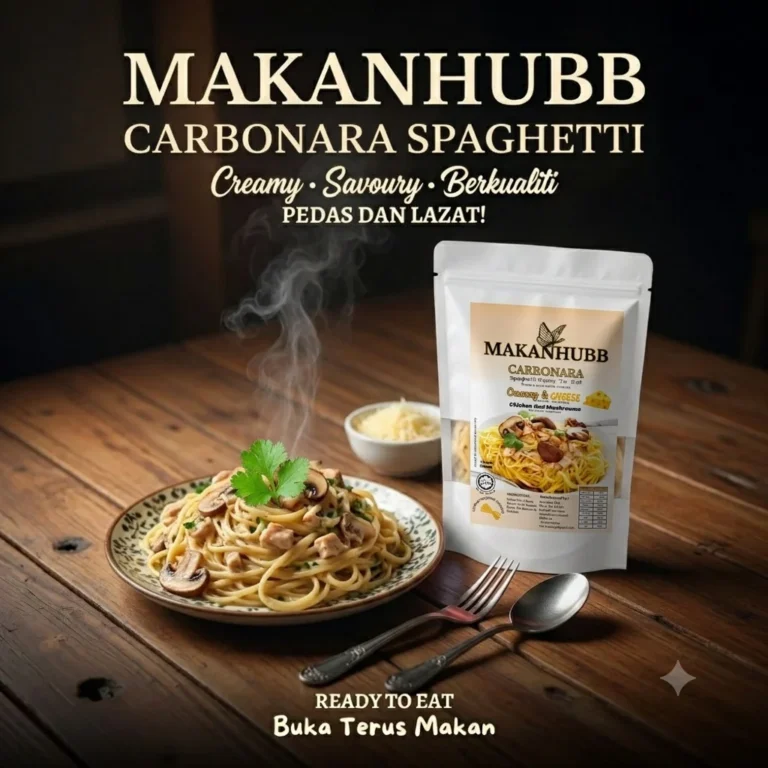
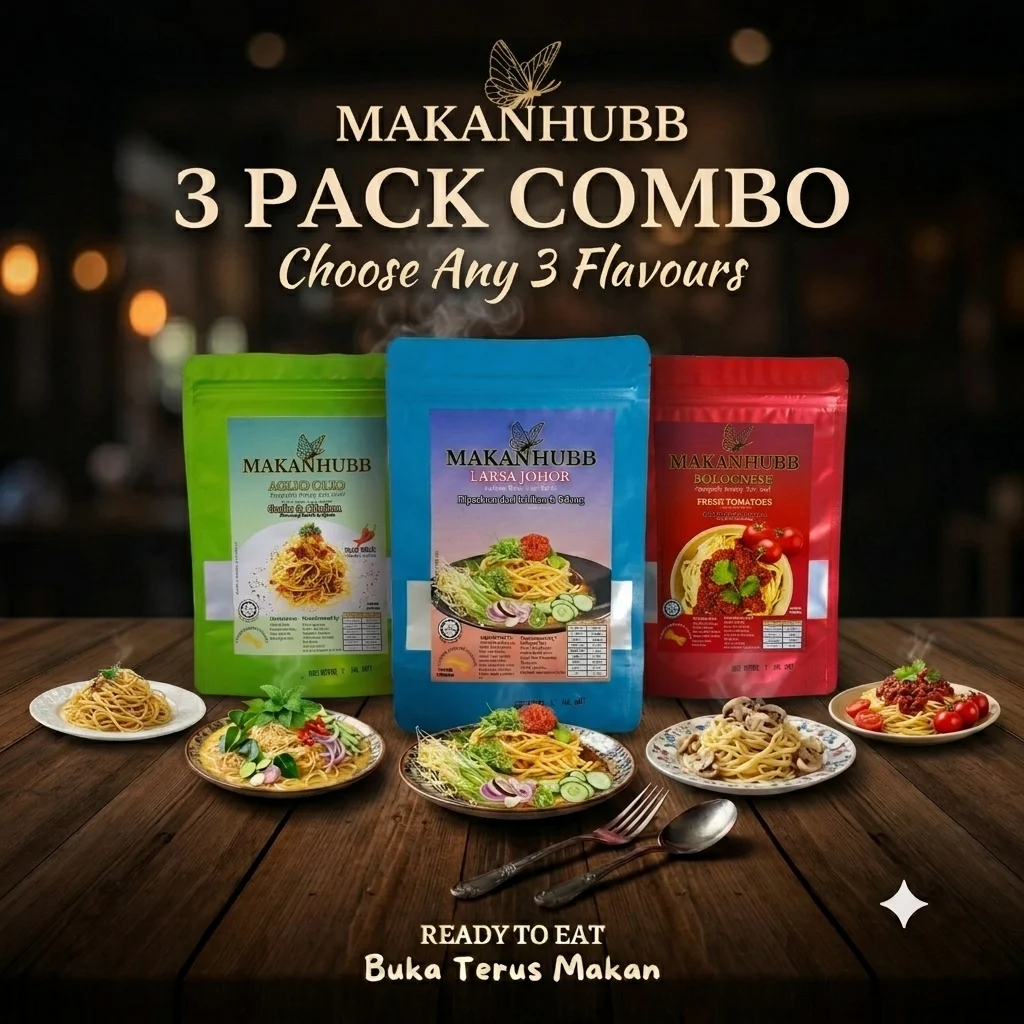
MakanHubb food in a retort pouch
In our kitchen in Wangsa Melawati, we fill every dish and pasta into a retort pouch, seal it, and then sterilise it. The packs need no fridge and keep for 1 to 2 years before opening. You can eat straight from the pack, or warm the sealed pack in hot water for a few minutes. Prices start from RM12.90 a pack.
For food businesses
Do you have your own recipe and want to sell it without a cold chain? Then we can help. For example, we can retort your cooking for you. See the details on our retort service page.
FAQ about the retort pouch
Is a retort pouch safe for food?
Yes, if it is made for food and the maker processes it correctly. The inner layer that touches the food is usually food grade polypropylene.
Can I put the pack in the microwave?
Not if it has an aluminium foil layer. First, move the food into a microwave safe bowl.
Why does it not need a fridge?
The food goes through sterilisation after sealing, so the germs that cause spoilage die and cannot get back in while the pack stays intact.
What is the difference between a vacuum pack and a retort pack?
A vacuum pack only removes air, so it still needs chilling. A retort pack, by contrast, goes through heat and pressure after sealing.
Can I recycle these packs?
It is hard because the plastic and foil layers stick together. Check what your local recycling centre accepts, and never litter.
Still have questions?
WhatsApp the MakanHubb team at 012-540 0263. We reply during office hours, Monday to Friday.