Quick answer: In Malaysia, convenience food usually means fast food such as burgers and fried chicken, plus instant noodles that are ready in minutes. It is easy and cheap, but eating it too often can push salt, sugar and fat past the recommended limits. Ready-to-eat retort dishes are another quick option, although you should still read the label.
Long workdays, hungry kids and a messy kitchen. In moments like these, many of us reach for something fast. This guide explains what people mean by makanan segera, the common health concerns with their sources, and where retort meals fit without overclaiming.
For longer term options, also see our guides to ready to eat food and long lasting food.
What does convenience food mean?
Malaysians use the term makanan segera for two rather different groups of food.
Fast food restaurants
This group includes burgers, fried chicken, fries, pizza and fizzy drinks from fast food chains. Staff prepare them in minutes, and you can buy them at the counter, at a drive through or through a delivery app.
Instant noodles and packaged meals
The second group covers shelf products such as instant noodles, instant porridge and cup meals. You only add hot water. In addition, frozen ready meals that you warm in a microwave fall into this group too.

Why people choose it
The main reason is time. After work and a traffic jam, few people have energy left to cook. Meanwhile, fast food outlets sit in almost every town, and delivery apps bring meals right to the door.
Price matters as well. A pack of instant noodles is cheap and filling, so it is popular with students and people living alone. Then there is taste, because salty, crunchy and fatty food appeals to most of us.
Wanting convenience is not wrong. However, the challenge is to keep the quick option from becoming the only option every day.
Health concerns about convenience food
An occasional fast food meal is not a big problem for most people. Instead, the issue starts when it becomes a daily habit.
High salt
The World Health Organization (WHO) recommends that adults eat less than 5 grams of salt a day. In Malaysia, the MyCoSS 2017/2018 study found an average intake of 7.9 grams a day, and four in five Malaysians ate too much salt, as Malay Mail reported.
Many instant noodles and fast food meals come with sauces, seasoning and powders that are high in sodium. So check the nutrition label, and consider using only half the seasoning packet.
Saturated fat and sugar
WHO also advises keeping saturated fat under 10 percent of daily energy, trans fat under 1 percent, and free sugars under 10 percent. A large fried meal with a sweet drink can approach these limits quickly.
Too few vegetables
Fast food sets rarely include enough vegetables. For example, the Ministry of Health Malaysia promotes the Suku-Suku Separuh healthy plate: a quarter carbohydrates, a quarter protein and half vegetables and fruit. Most fast food sets fall far short of this.
Fewer vegetables also means less fibre. As a result, you may feel hungry again soon and reach for another snack.
Where retort meals fit among convenience food
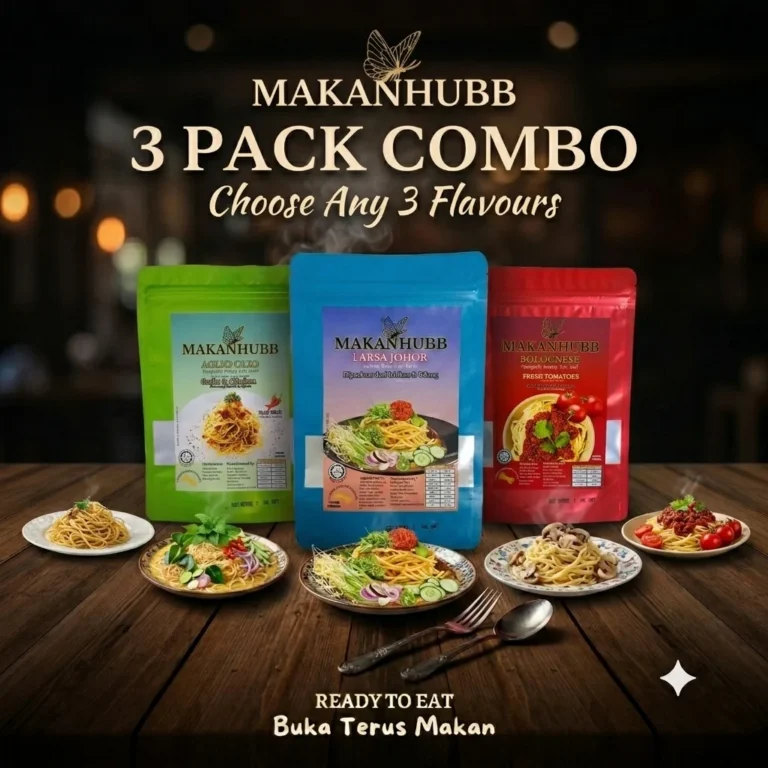
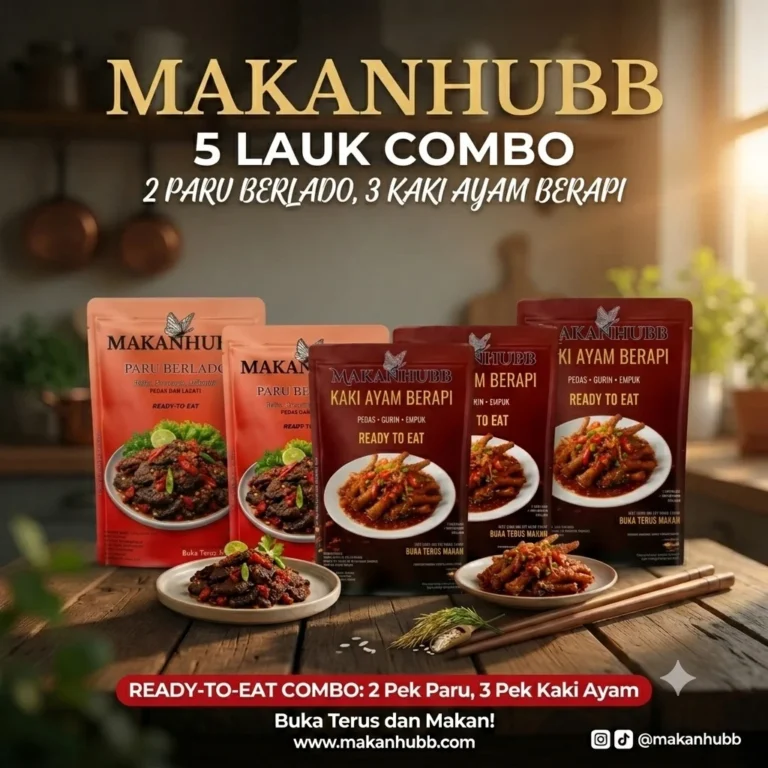
Retort dishes are cooked, sealed in a pouch and sterilised with heat. Because of this, you can store them at room temperature and eat them straight away or after warming in hot water.
For speed, they match convenience food, since they are ready in minutes with no cooking. The difference is the taste, which is closer to home dishes such as rendang, curry or sambal.
Still, we want to be honest. Retort meals are processed food too, and they can contain salt and oil. We do not claim they are healthier than fast food without data to back it up. Instead, read the label and balance the meal with vegetables or fruit.
Quick food options compared
| Option | Time to eat | Needs a fridge? | Note |
|---|---|---|---|
| Fast food outlet | A few minutes, plus travel time | No, eaten right away | Portion sizes and sweet drinks add up |
| Instant noodles | 3 to 5 minutes | No | Seasoning is usually high in sodium |
| Retort dishes | Straight away or 5 to 10 minutes warming | Not before opening | Check the label, add vegetables |
| Frozen ready meal | A few minutes in a microwave | Yes, a freezer | Depends on a steady power supply |
For a closer look, read our frozen vs retort food and canned food guides.
How to make convenience food more balanced
- Pick a regular size, not the upsized set.
- Swap fizzy drinks for plain water.
- Add vegetables, such as boiled greens, cucumber or a salad.
- Use half the instant noodle seasoning.
- Limit it to a few times a week rather than every day.
- Plan home stock so you have another option when tired.
- When ordering through an app, check calorie or ingredient details if they are shown.
- Share sides such as fries with the family.
Retort dishes for busy days
One reason people buy fast food is that there is nothing at home. However, with a few packs of retort dishes and white rice in the cupboard, you have a home style meal in minutes.
MakanHubb products need no fridge and keep for about 1 to 2 years before opening. For example, soak the pouch in hot water for a few minutes, then serve it with boiled vegetables. Prices start from RM12.90 a pack.
FAQ about convenience food
Is all convenience food unhealthy?
Not necessarily. The main issues are how often you eat it and the portion size. So with smart choices, an occasional meal can fit a balanced diet.
How much salt should I eat a day?
WHO recommends less than 5 grams of salt a day for adults, which is about one teaspoon.
Can I eat instant noodles every day?
It is better not to. The seasoning is usually high in sodium, and noodles alone lack protein and vegetables.
Are retort dishes healthier than fast food?
We do not make that claim. Retort dishes are a quick option with home style flavour, so check the label and add vegetables.
How can I rely less on fast food?
First, keep long lasting food at home. Then plan a weekly menu and cook extra at the weekend to store.
Still have questions?
WhatsApp the MakanHubb team at 012-540 0263. We reply during office hours, Monday to Friday.