
Quick answer: Good confinement food is balanced, freshly cooked and easy to digest: rice or oats, fish, chicken, eggs, green vegetables, fruit and enough water. Many families follow traditions such as avoiding “cooling” or “windy” foods, but your doctor’s advice comes first, especially after a c-section or if you have diabetes, high blood pressure or anaemia.
The first weeks after giving birth are full of new things: breastfeeding, broken sleep and a body that is still healing. In many Malaysian families, meals during confinement are handled by the mother, mother-in-law or a confinement lady, with a list of dos and don’ts passed down over generations. This guide sets out what medical sources recommend, what is tradition, and how the household can manage meals without putting the load on the new mother.
More confinement guides
 ConfinementConfinement Menu: A Sample Daily Menu for New MumsA sample 3-day confinement menu, the basics of planning your own and tips for preparing meals for a mother in confinement.
 ConfinementConfinement Dishes: Fish, Chicken, Egg and Vegetable Ideas for New MumsConfinement dish ideas using fish, chicken, eggs and vegetables, with simple cooking methods and dishes families often avoid.
 ConfinementFood After C-Section: What to Eat During Caesarean RecoveryA guide to food after c-section based on medical advice, traditional confinement practices and tips to make meals easier at home.
 ConfinementHow Long Is Confinement? The 44-Day Tradition and Medical AdviceHow long is confinement in Malay, Chinese and Indian traditions, plus the recovery period and postnatal checks in medical guidance.
 ConfinementFood After Confinement: What to Eat After the First 30 DaysA guide to food after confinement: bringing back variety step by step, the KKM balanced plate and when to ask your doctor.
What is confinement food
Confinement food is what a mother eats during the confinement period, the first few weeks after childbirth. In Malay tradition this period usually lasts 40 to 44 days. The Ministry of Health Traditional and Complementary Medicine postnatal care guideline also gives 40 to 44 days, which is about six weeks.
From a health point of view, the goal of eating well in this period is simple. The body needs to replace the energy and nutrients lost during birth, repair tissue and support breastfeeding. Confinement practices vary by family, state and community. Some are very strict, others more relaxed. There is no single correct list for every mother.
Nutrients your confinement food should cover
Pantai Hospital explains that food during confinement is meant to meet the mother’s nutritional needs and help lower the risk of complications such as anaemia and infection. In short, confinement food should include the following every day.
Protein for recovery
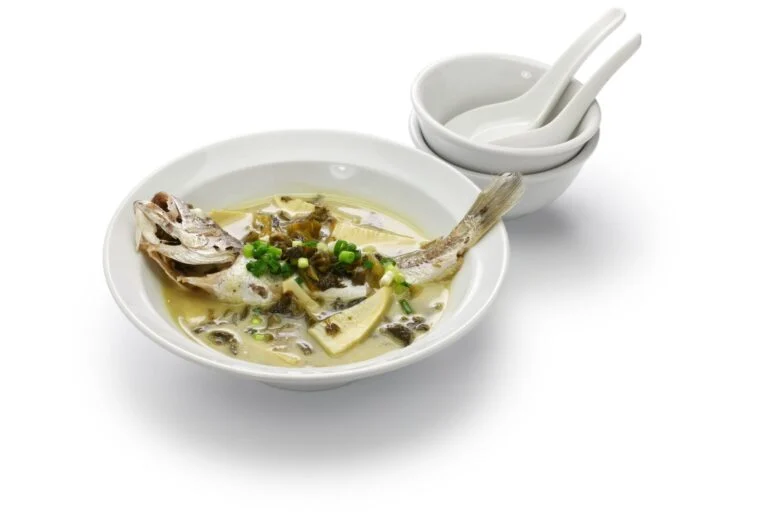
Fish, chicken, eggs, lean meat, legumes and tofu supply protein to repair tissue after birth. Snakehead fish (ikan haruan) is a traditional favourite in many families, while red snapper, mackerel (ikan kembung) and salmon are easy to find. Avoid high-mercury fish such as shark and swordfish, especially if you are breastfeeding.
Iron and green vegetables
Mothers lose blood during delivery, so iron matters. Sources include meat, liver, legumes and green vegetables such as spinach. The WHO says iron supplements may be given to mothers after birth in places where anaemia is common. Even so, the decision to take a supplement should be made with your doctor or clinic nurse, not on your own.
Fibre and enough water
Constipation is common after birth. Oats, brown rice, vegetables, fruit and legumes help keep digestion moving. Water also matters, especially for breastfeeding mothers. Sunway Medical Centre recommends at least eight glasses of water a day. This differs from some traditional practices that limit drinking water, so talk to your doctor if your family suggests otherwise.
Common confinement food in Malaysian homes
The table below is a general example. Adjust it to the mother’s appetite, family practice and the doctor’s advice.
| Group | Examples | Notes |
|---|---|---|
| Rice and grains | White rice, rice porridge, oats, wholemeal bread | Porridge suits the early days if appetite is low |
| Fish | Snakehead, red snapper, mackerel, salmon | Cook as soup, steamed, grilled or pan-fried with little oil |
| Chicken and eggs | Chicken soup, ginger chicken, boiled eggs | Easy sources of protein |
| Vegetables | Spinach, choy sum, broccoli, pumpkin, carrot | Many families cook them with ginger or onion |
| Spices | Ginger, turmeric, black pepper | Used in tradition to “warm” the body |
| Fruit | Banana, apple, dates | Some families avoid fruit seen as “cooling” |
| Drinks | Plain water, warm water, milk | Cut down on sweet and caffeinated drinks |
Ginger and turmeric are common in confinement cooking. Pantai Hospital notes that ginger helps digestion and turmeric contains curcumin. Use them in normal cooking, not as concentrated preparations or large doses, unless your doctor says it is fine.
Foods often avoided during confinement
By tradition, mothers in confinement are often told to avoid “cooling” foods such as cucumber, “windy” foods such as jackfruit and kangkung, and “bisa” foods such as prawns and squid, which some believe slow wound healing. These lists come from community practice and differ between families. They are not medical fact.
From a medical view, hospitals such as Pantai and Gleneagles suggest cutting down on:
- Caffeine, as it can disturb sleep.
- Alcohol, as it can pass into breast milk.
- High-mercury fish such as shark and swordfish.
- Spicy, oily, very salty and processed food, which can upset digestion.
- Raw or undercooked food.
- Food and drinks high in sugar.
On jamu and herbs, the Ministry of Health guideline above stresses safe use of herbs during confinement. Ask your doctor or pharmacist before taking jamu or herbal remedies, especially if you are breastfeeding or on medication.
Confinement food after a c-section or with health conditions
Mothers who delivered by caesarean section should follow the doctor’s instructions on when to start eating and drinking, and what to eat in the first days. The wound needs enough protein, and constipation should be avoided so you do not strain. See our guide on food after c-section for more.
Mothers who had gestational diabetes, high blood pressure or anaemia should get advice from a doctor or dietitian. For example, a mother with diabetes may need to watch her rice and sweet drinks, while a mother with high blood pressure may need to cut down on salt. Every mother’s needs are different.
If you are breastfeeding and worried about milk supply or your baby’s weight, see a nurse at the health clinic or a lactation counsellor. No single food is guaranteed to increase milk.
How long to watch what you eat after birth
Many mothers keep to confinement food for the traditional 40 to 44 days. The official Malaysian government portal says nurses make regular home visits after delivery, and mothers should go for a check-up at the health clinic one month after giving birth. Use those visits to ask about food. After confinement, return gradually to a normal balanced diet. Read more in how long is confinement.
Warning signs that need a clinic or hospital
The Ministry of Health guideline lists conditions after birth that need urgent referral:
- Heavy bleeding after delivery.
- Fever of 38 degrees Celsius or higher, especially on two days in a row.
- Sudden pain, redness and warmth in the calf.
- Serious mood changes such as loss of interest, being unable to sleep or lasting feelings of guilt.
Do not wait for confinement to end. Go straight to the nearest clinic or hospital.
More confinement guides
- Confinement menu: a sample daily menu for the first few days.
- Confinement dishes: fish, chicken and vegetable ideas.
- Food after c-section: a guide for mothers after surgery.
- How long is confinement: the 44-day tradition and the postnatal check.
- Eating well after the first 30 days: how to return to normal meals.
Making meals easier at home
During confinement the mother needs rest, and preparing confinement food every day is tiring. Kitchen duty often falls on the husband, grandmother or helper, who are also busy with the baby and older children. There are two ways MakanHubb can help.
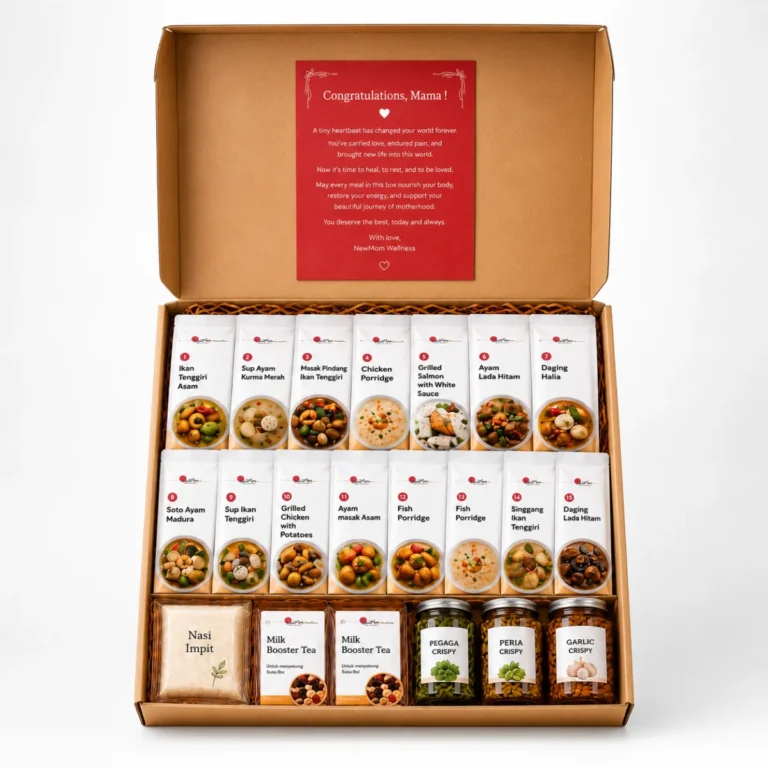
7-Day Confinement Set, MakanHubb x NewMom. A week of confinement meals. WhatsApp us to ask about the set, the menu and delivery to your area.
Ask about the 7-Day Confinement Set
Ready meals for the rest of the household. MakanHubb retort food keeps without a fridge, so the husband and family can eat without cooking. Our regular retort dishes are not made for a confinement diet and some are spicy, so they are for other family members, not a replacement for the mother’s meals. Prices from RM12.90 a pack.
FAQ about confinement food
Can I eat vegetables during confinement?
Yes. Vegetables give fibre and vitamins that help recovery and prevent constipation. If your family avoids vegetables seen as cooling, cooking them with ginger or onion is a common middle ground.
Is it true that I cannot drink cold water during confinement?
The ban on cold water is a tradition. From a health view, what matters is drinking enough water every day, especially if you are breastfeeding. If unsure, ask your doctor or nurse.
Do breastfeeding mothers need to eat more?
Breastfeeding mothers need balanced meals and enough water. Sunway Medical Centre says breastfeeding burns about 450 to 500 calories a day. For specific needs, see a dietitian.
Can I eat chicken during confinement?
Yes. Chicken soup and ginger chicken are common confinement dishes. Choose low-oil cooking such as soup, boiling or steaming.
Should I take jamu during confinement?
Jamu is a traditional choice, not a medical need. Ask your doctor or pharmacist first, especially if you are breastfeeding, had a c-section or are on medication.
Still have questions?
WhatsApp the MakanHubb team at 012-540 0263. We reply during office hours, Monday to Friday.