Quick answer: Food after confinement, or after the first 30 days, can become more varied step by step: rice or whole grains, fish, chicken, eggs or beans, plenty of vegetables and fruit, and plain water. The Ministry of Health Malaysia (KKM) recommends the Suku-Suku Separuh (quarter, quarter, half) plate for balanced meals. The clinic check one month after birth is a good time to ask your doctor about food.
After a month of confinement, many mothers start asking: what food after confinement is fine to eat, and can the pantang rules be relaxed? In many Malay families confinement continues until day 44, but food restrictions are often eased bit by bit after the fourth week. This guide explains what medical sources recommend, which foods families usually bring back, and when to talk to your doctor.
What food after confinement means
This refers to food in the later part of confinement, after the stricter early weeks. Every family has its own rules. Some start to allow vegetables considered “cold”, certain fruits or seafood, while others wait until day 44. All of these are traditions, not medical rules.
Medically, there is no set date to “end” the confinement diet. A review in the IIUM Medical Journal Malaysia found that mothers in confinement in Malaysia often fall short on energy, vitamins and minerals, and that food restrictions can make it harder to meet nutritional needs while breastfeeding. So eating a varied diet earlier is usually not a problem, unless your doctor advises otherwise.
What medical sources say
Follow the Suku-Suku Separuh plate
The KKM Nutrition Division promotes the Malaysian Healthy Plate, or Suku-Suku Separuh: a quarter of the plate rice, noodles, bread or grains (whole grains are better), a quarter fish, chicken, meat or beans, and half the plate vegetables, plus a piece of fruit and a glass of plain water or an unsweetened drink. It is a simple guide for the mother and the whole family.
Balanced eating while breastfeeding
According to the NHS, breastfeeding mothers do not need a special diet. What it recommends is a varied diet every day, including at least five portions of fruit and vegetables, higher fibre starchy foods such as brown rice, protein such as fish, eggs, beans and lean meat, and lower fat milk or dairy. Drink plenty and keep a drink nearby when breastfeeding.
Food after confinement that families usually bring back
Bring new foods back a little at a time so you know what suits your body. These are foods Malaysian families commonly reintroduce.
A wider range of vegetables and fruit
Vegetables such as kangkung, spinach, cabbage and cucumber, and fruits such as watermelon and pineapple, are sometimes avoided during confinement because they are considered “cold” or “windy”. This is a traditional belief. Nutritionally, vegetables and fruit provide fibre, vitamins and minerals, and fibre helps prevent constipation.
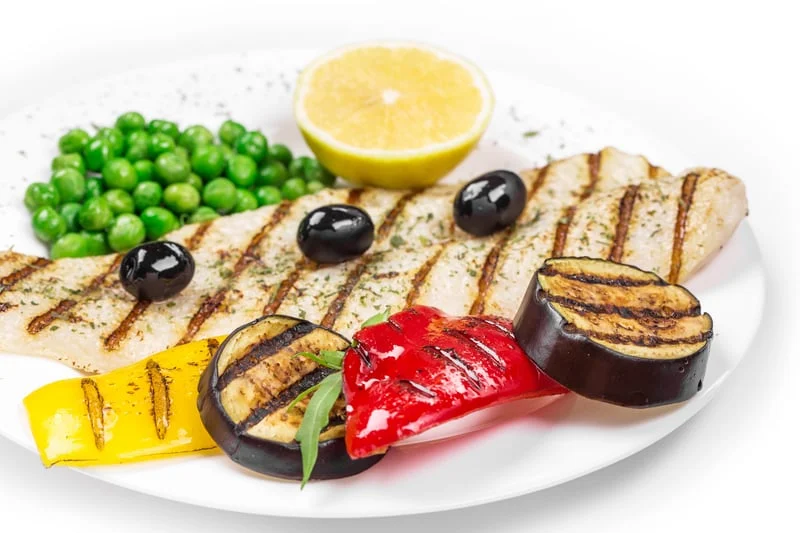
Fish and seafood
Fish is a good source of protein. The NHS recommends breastfeeding mothers eat at least two portions of fish a week, one of them oily such as salmon, sardines or mackerel, but no more than two portions of oily fish a week. Large fish such as shark, swordfish and marlin should be limited to one portion a week. If you or your family have a seafood allergy, take care.
Coffee and tea
Caffeine can pass into breast milk. The NHS advises no more than 200mg of caffeine a day, and less while your baby is under six months old. Caffeine is found in coffee, tea, cola, energy drinks and chocolate.
When to talk to your doctor
The MyGOV portal says mothers should go for a check at a health clinic one month after delivery, including blood pressure, weight and a haemoglobin test. Use this appointment to ask about food, especially if you:
- had gestational diabetes or have diabetes
- have high blood pressure
- have been diagnosed with anaemia
- had a caesarean and the wound has not fully healed
- have concerns about breastfeeding or your weight
A dietitian can help plan a suitable menu. Do not start supplements or traditional remedies without asking your doctor or pharmacist.
A sample plate of food after confinement
This is only an idea to adjust with your doctor’s advice and your family’s taste:
- Breakfast: wholemeal bread with eggs, and fruit.
- Lunch: rice, steamed or grilled fish, mixed vegetables and soup.
- Afternoon: milk or yoghurt, and nuts.
- Dinner: rice, chicken soup or roast chicken, and green vegetables.
For more ideas, read main confinement guide, a sample confinement menu and confinement dishes. If you had a caesarean, see also food after c-section, and for the length of confinement, how long is confinement.
Making meals easier at home
After a month, many husbands go back to work and mothers start caring for the baby on their own. There is less time to cook. A few things that help:
- Keep quick ingredients ready, such as eggs, cut vegetables and cleaned fish.
- Cook enough for two meals and store the extra safely.
- Ask family for help on tiring days.
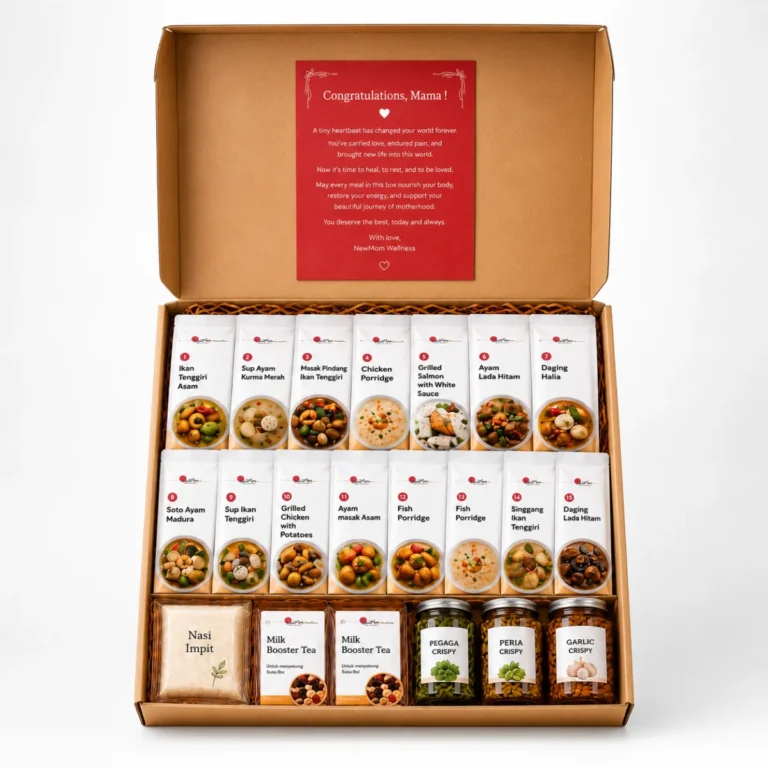
If you are still in the early weeks of confinement, or want help for a family member who has just given birth, MakanHubb and NewMom offer the 7-Day Confinement Set (7-Day Confinement Set). WhatsApp us to ask about the set, menu and delivery.
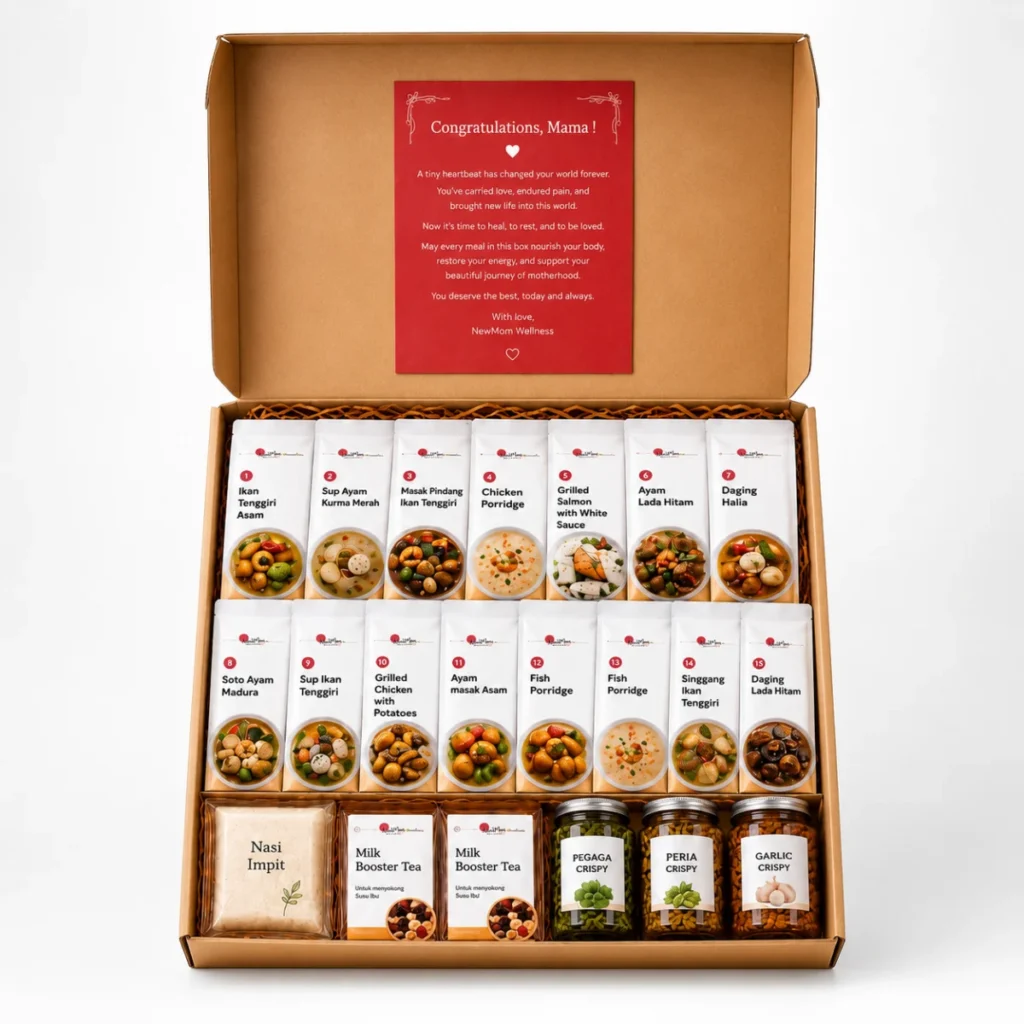
Ask about the 7-Day Confinement Set
For the husband, family and helpers, MakanHubb retort food keeps without a fridge and is ready to eat after heating, from RM12.90 a pack. These regular dishes are for the household, not the mother’s confinement menu, because some of them are spicy. Our White Rice (white rice) is easy to pair with your own dishes.
FAQ about food after confinement
Can I eat “cold” vegetables after 30 days of confinement?
The idea of “cold” vegetables is a traditional belief. Nutritionally, vegetables provide fibre and vitamins. If you are unsure, talk to your doctor or a dietitian.
Can I drink coffee after confinement?
Yes, within limits. The NHS advises breastfeeding mothers to keep caffeine to no more than 200mg a day, and less while the baby is under six months old.
Can I start dieting to lose weight?
Ask your doctor at your postnatal check, especially if you are breastfeeding. Focus on a balanced plate and avoid cutting down sharply without advice.
Do I need to wait 44 days to eat seafood?
That is a tradition in some families. The NHS includes fish as part of a breastfeeding mother’s diet. If you have an allergy, avoid it and talk to your doctor.
Can mothers who had a c-section follow the same guide?
Generally yes, but follow your doctor’s advice on wound recovery and any restrictions you were given.
Still have questions?
WhatsApp the MakanHubb team at 012-540 0263. We reply during office hours, Monday to Friday.