
Quick answer: Common confinement dishes cooked at home are simple fish, chicken, egg and vegetable dishes: soups, steamed, grilled or stir-fried with little oil, often with ginger, onion and black pepper. Choose dishes high in protein and not too spicy, salty or oily, and follow the doctor’s advice if the mother had a c-section or has a health condition.
When there is a mother in confinement at home, whoever is cooking often runs out of ideas for dishes that suit her and do not get boring. This guide collects dish ideas that Malaysian families commonly cook, with a short description of how each is made. These are not full recipes, so use the amounts you normally use and adjust to the mother’s taste.
What makes good confinement dishes
According to Pantai Hospital, food after childbirth should supply protein to repair tissue as well as vitamins, minerals and fibre for recovery. Hospitals such as Gleneagles also suggest cutting down on spicy, oily, very salty and processed food. So suitable dishes usually:
- Include a protein such as fish, chicken, eggs, lean meat or tofu.
- Are cooked as soup, boiled, steamed, grilled or stir-fried with little oil.
- Are not too spicy, salty or sweet.
- Are fully cooked, not raw or half-cooked.
Ginger, turmeric, onion and black pepper are common in traditional confinement cooking to “warm” the body. This is a practice passed down through generations. Use them in normal cooking amounts.
It also helps to change the dishes every day. A mother who eats the same dish for weeks can lose her appetite, and may then eat less than she needs. Rotate fish, chicken and eggs, and switch between soup, steaming and grilling.
Fish confinement dishes
Fish is a protein that is easy to digest. Choose fresh fish and avoid high-mercury fish such as shark and swordfish, especially if the mother is breastfeeding.
Snakehead fish soup
Snakehead fish (ikan haruan) is boiled with ginger, onion and a little black pepper into a clear soup. Many families believe snakehead fish helps wounds heal faster. This is a traditional belief, so treat it as part of a balanced diet, not a replacement for the doctor’s care.
Steamed fish with ginger
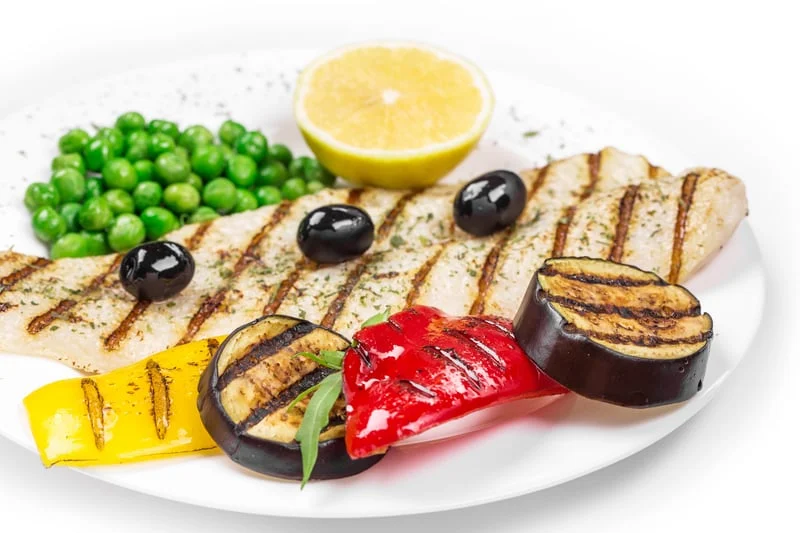
Red snapper, sea bass (siakap) or pomfret is steamed with sliced ginger, garlic and a little soy sauce. This method uses almost no oil and the flesh stays soft, which suits the early days.
Grilled or baked fish
Mackerel (ikan kembung) or trevally (ikan selar) is rubbed with turmeric and a little salt, then grilled or baked. Serve with rice and vegetables. Skip very spicy sambal.
Chicken and egg confinement dishes
Chicken and eggs are easy to find, quick to cook and liked by most people.
Ginger chicken
Chicken is stir-fried with plenty of ginger, onion and a little soy sauce, then cooked until tender. This is one of the dishes most often linked to confinement in Malay families.
Black pepper chicken soup
Chicken is boiled with carrot, potato, ginger and black pepper. Soup makes it easy for the mother to take in more fluid, and it goes down easily when her appetite is low.
Boiled or steamed eggs
Eggs are a cheap source of protein. Boil or steam them, or make an omelette with little oil, as a side dish with fish or vegetables.
Vegetables to round out confinement dishes
Vegetables matter for fibre and vitamins. Sunway Medical Centre says vegetables and fruit help prevent constipation after birth. Common choices:
- Spinach or choy sum stir-fried with garlic.
- Steamed broccoli or French beans.
- Pumpkin or carrot cooked with a little coconut milk, if the mother is comfortable with it.
- Mixed vegetable soup with ginger.
If the family avoids vegetables seen as “cooling” or “windy”, cooking them with ginger is a common middle ground. Do not let the mother go without vegetables altogether.
Dishes often avoided during confinement
By tradition, some families avoid dishes seen as “bisa”, such as prawns and squid, or dishes said to be “windy”. These lists differ between families and are community practice, not medical fact. From a health view, what matters more is cutting down on dishes that are very spicy, oily, salty or processed.
Mothers who had a c-section, or who have diabetes, high blood pressure or anaemia, should ask a doctor or dietitian which dishes suit them. Read food after c-section for guidance after surgery, and confinement food for the full picture. To turn these dishes into a daily plan, see confinement menu.
Making meals easier at home
Cooking confinement dishes every day while looking after a baby is tiring. If you would like ready confinement meals, MakanHubb has the 7-Day Confinement Set.
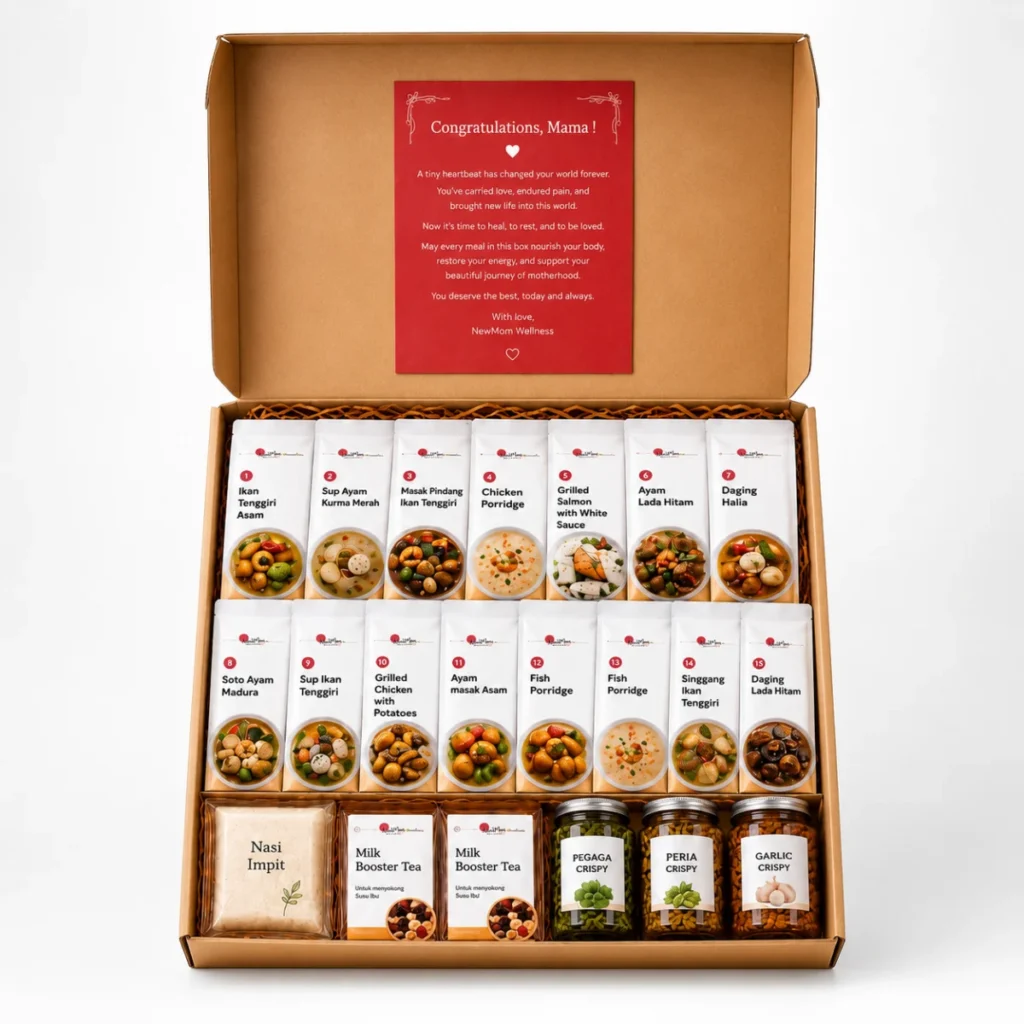
7-Day Confinement Set, MakanHubb x NewMom. WhatsApp us to ask about the set, the menu and delivery to your area.
Ask about the 7-Day Confinement Set
For the rest of the family, MakanHubb retort dishes keep without a fridge and heat up in a few minutes, so the husband and family can eat without cooking. Our regular retort dishes are not made for a confinement diet and some are spicy, so they are not for the mother in confinement. Prices from RM12.90 a pack.
When confinement is nearly over, read food after confinement.
FAQ about confinement dishes
Which fish suit confinement dishes?
Snakehead, red snapper, sea bass, pomfret and mackerel are common choices. Avoid high-mercury fish such as shark and swordfish.
Can I eat prawns during confinement?
Some families avoid prawns because they are seen as “bisa”. This is a tradition. If the mother has no allergy and the doctor has not said no, the choice is up to her and the family.
Can I use coconut milk in confinement dishes?
Many families use a little coconut milk. Cut down on very fatty dishes, and ask the doctor if the mother has a specific health condition.
Should I cook separate dishes for the mother?
Usually yes, because the family’s dishes may be spicy or oily. One easy approach is to cook simple dishes for the mother and keep ready meals for the rest of the family.
How long can home-cooked confinement dishes keep in the fridge?
Home-cooked dishes are best eaten within a day or two and reheated until piping hot before serving. If in doubt, throw it out.
Still have questions?
WhatsApp the MakanHubb team at 012-540 0263. We reply during office hours, Monday to Friday.