Quick answer: The rules if you want to bring food to Saudi Arabia are stricter than many people think. Saudi Food and Drug Authority (SFDA) guidelines allow food for personal use only, labelled and with an expiry date, but the prohibited list also names homemade food, chilled or frozen ready meals and meat products. So do not pack meat dishes. If you want a back-up, choose light meat-free items such as rice in a pouch, and confirm with your agency or Tabung Haji first.
Many Malaysian pilgrims worry about food before they leave. Some are not used to Arab cooking, some have sensitive stomachs, and some simply want a taste of home after a long day at Masjidil Haram. The question is simple: can you bring food to Saudi Arabia in your luggage? This guide sums up what official Saudi and Malaysian sources say as of 31/10/2026, and what is safer to pack.
MakanHubb is a food company, not an authority. Customs and health rules can change every season, so check the latest requirements with a licensed umrah agency or Tabung Haji before you pack.
What Saudi rules say if you bring food to Saudi Arabia
The main reference is the SFDA document on clearance requirements for medicines and food brought for pilgrims’ use, in its 1447H Hajj season version. You can read the full document on the SFDA website. The section on food carried by pilgrims for personal use sets several conditions:
- Food must be for your own needs. Commercial quantities, or more than you need, are not allowed.
- Every food item must carry a label, whatever the product type.
- Expired food, or food without an expiry date, is not allowed in.
- Spoiled, mouldy or smelly food, or food in unclean containers, is rejected.
- Food containing alcohol or pig fat is prohibited.
- Items on the list of food prohibited for import are also banned.
The catch is that prohibited list. The annex of the same document, in Arabic, lists categories such as homemade food without a commercial label, chilled or frozen ready-to-eat meals, and many types of meat including processed and ready-to-eat meat products. SFDA states that the Arabic version is the official reference if it differs from the English one. We could not read every line of that annex clearly, so assume meat dishes are not safe to bring.
Tabung Haji guidance for hajj pilgrims
For hajj pilgrims, the Panduan Haji Edisi Jemaah Haji Malaysia booklet published on the Tabung Haji website has a few points on food:
- Strong-smelling food such as keropok, or food that spoils quickly, is on the list of items you cannot bring.
- Electric kettles are on the same list.
- Pilgrims are asked not to bring food into the tents.
- Meals are provided three times a day for each pilgrim from 8 to 13 Zulhijjah.
This means hajj pilgrims do not need to worry about meals on the peak days. Follow the instructions from TH and the maktab staff, and refer to Lembaga Tabung Haji for the latest guidance. Other preparation for hajj pilgrims is in our hajj preparation guide.
Which items are safer when you bring food to Saudi Arabia
Based on the conditions above, the lowest-risk food is food that is:
- Commercially packed and sealed, with a full label.
- Marked with a clear expiry date on the pack.
- Free of meat and chicken.
- Fine without a fridge or freezer.
- In a small quantity for yourself, for example for one or two nights.
Good examples are white rice in a pouch, biscuits, nuts and labelled powdered drinks. Homemade rendang, serunding, sambal bilis and dishes in plastic containers do not meet the label and expiry date conditions, so leave them at home.
Why not bring meat dishes even in a sealed pouch
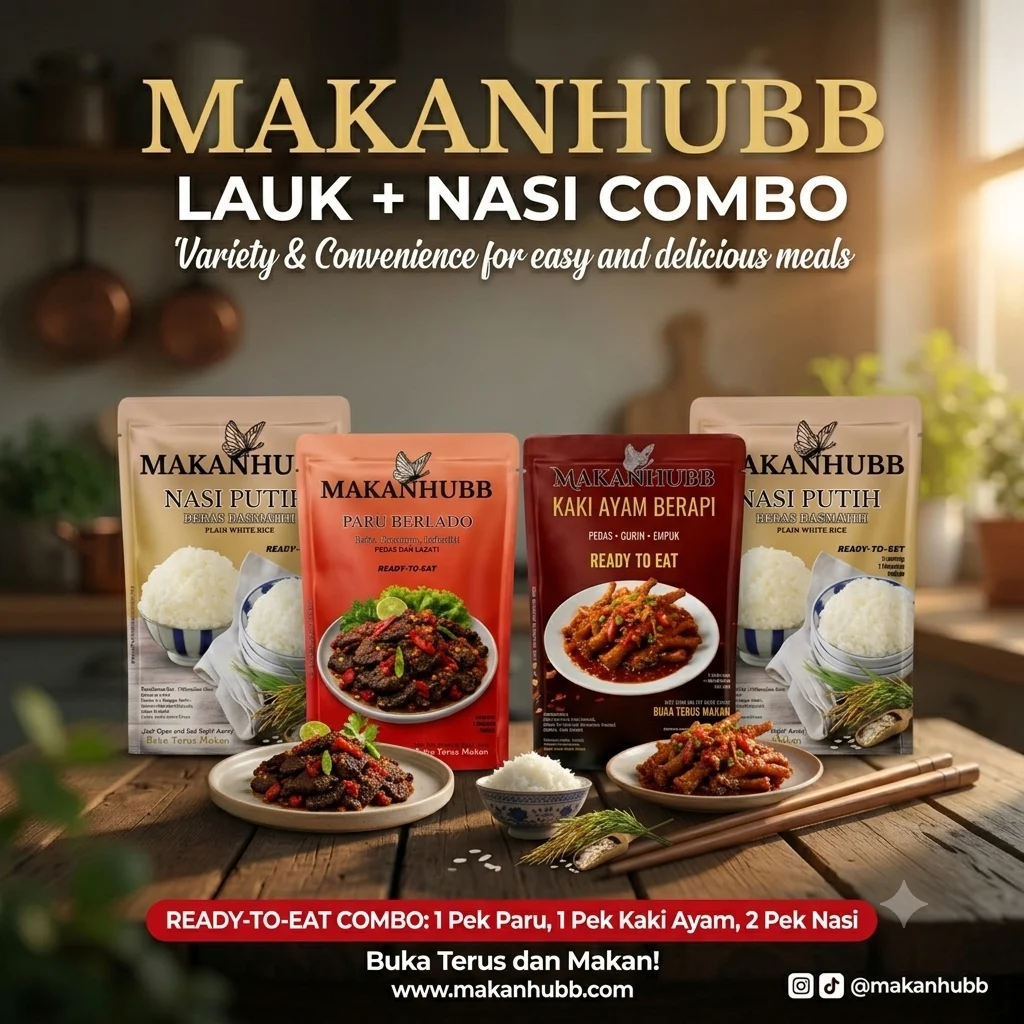
MakanHubb retort dishes such as kaki ayam berapi and paru berlado are sealed and carry an expiry date, but they are ready-to-eat meat products. That category is named in the SFDA prohibited list. We would rather you leave them behind than have them confiscated or your bag held at the airport. If you bring food to Saudi Arabia, keep it meat-free, and save the meat dishes for eating in Malaysia.
How to bring food to Saudi Arabia if you still want a back-up
If your agency confirms a small meat-free back-up is fine, follow these steps:
- Pack it in checked luggage. Retort pouches are over 100 ml, so they do not suit cabin bags. See also our guide on food on a plane.
- Keep the original packaging. Do not throw away the box or label. A label and expiry date are SFDA conditions.
- Bring only a little. Enough for the first night or for late-night hunger. Hotels and shops around Masjidil Haram have plenty of food options.
- Declare if asked. Answer officers’ questions honestly.
- Warm it in hot water. Soak the pouch in hot water from the hotel for a few minutes. Hajj pilgrims should remember that electric kettles are on the TH list of items not to bring.
Remember too that most food and drinks are not allowed inside Masjidil Haram except dates, water and coffee, according to a 2024 Gulf News report. Eat at the hotel or outside the mosque area.
Back-up food for pilgrims: what MakanHubb suggests
If you bring food to Saudi Arabia, MakanHubb White Rice is the most suitable choice because it is just rice in a 200 g pouch, with no meat, no fridge needed and a shelf life of 1 to 2 years. Eat it with dishes bought there, or with labelled bottled sambal if allowed. Prices from RM12.90 a pack.
Meat dishes are more useful at home. Many pilgrims get home tired and have not had time to go to the market. Keep a few packs of dishes and rice in the kitchen before you leave, so there is food ready when you return. Family members staying at home can use the same stock.
Tips for eating well in the Holy Land
- Eat before leaving for the airport, because check-in and the flight to Jeddah or Madinah take quite long.
- Drink water often. Makkah is hot, especially in summer.
- Avoid food that has been left out for long or is undercooked. The Saudi Ministry of Health has a guide on avoiding food poisoning for pilgrims.
- Pack stomach medicine and oral rehydration salts (ORS) in your personal medicine bag.
- If you have special dietary needs, tell your agency early so they can arrange it with the hotel.
A full checklist before you fly is in our umrah preparation guide and umrah packing list. For other trips, read our travel food guide.
FAQ: can you bring food to Saudi Arabia?
Can I bring rendang or serunding to Makkah?
It is not advisable. Homemade rendang and serunding have no label or expiry date, and they are meat products. Both points are covered in the SFDA conditions and prohibited list.
Can I bring food to Saudi Arabia in my cabin bag?
Dry food such as biscuits is usually fine. Retort pouches, sauces and sambal over 100 ml need to go in checked luggage. Check your airline’s rules.
How much food is allowed?
SFDA does not state a weight limit. It only says food must be for your own needs, not commercial quantities. Bring only a little and ask your agency if in doubt.
Are hajj pilgrims given meals?
Yes. The TH guide states that meals are provided three times a day for each pilgrim from 8 to 13 Zulhijjah. For other days, follow the package details and TH briefings.
How do I warm rice in a pouch at the hotel?
Soak the sealed pouch in hot water for a few minutes, then cut it open and eat. Use the hot water provided by the hotel.
Still have questions?
WhatsApp the MakanHubb team at 012-540 0263. We reply during office hours, Monday to Friday.