Quick answer: University hostel essentials are your registration documents, bedsheets and a pillow, clothes, toiletries, study gear, basic medicine and a small stock of dry food. Before buying a kettle or rice cooker, check your residential college rules, because many colleges ban cooking in rooms.
Registration week is always hectic. Parents rush to the shops and students worry about forgetting something. This guide sorts university hostel essentials by category, explains the appliance rules colleges commonly set, and suggests food that needs no cooking.
It suits students heading to UiTM, UM, UKM, other public universities, polytechnics and vocational colleges. However, every institution has its own list and rules. So treat your offer letter and the residential college handbook as the main reference.
University hostel essentials by category
Split your things into groups so they are easy to check while packing. For a full list you can tick off item by item, see our university packing list.
Documents and registration
Keep every document in one waterproof plastic file. Bring the originals and a few copies.
- Offer letter and residential college confirmation slip
- MyKad, SPM or STPM certificates and any other certificates requested
- Passport-size photos
- Loan or scholarship documents, if any
- Bank card or some cash for the first week
Bedding and room items
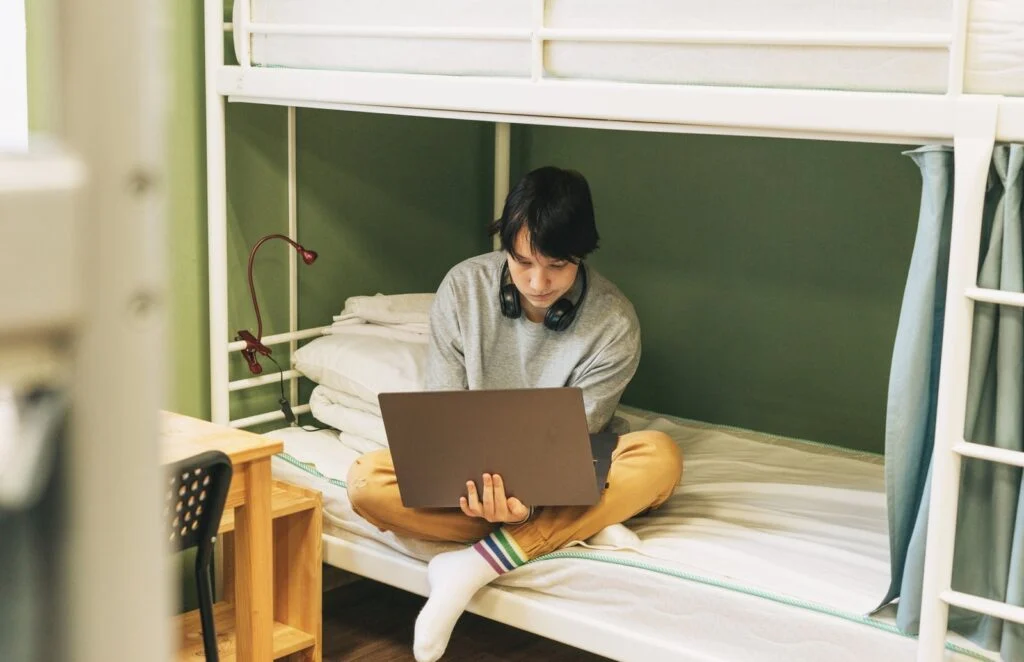
Most college rooms already have a bed, mattress, desk and wardrobe. Still, you need your own bedsheet, pillowcase, pillow, blanket and towel. Measure the mattress first if you can, because hostel mattresses are usually single size.
Also bring clothes hangers, a laundry basket, a padlock for the wardrobe and a few storage boxes. Containers with lids are very useful for keeping food away from ants.
Clothes and personal items
Pack daily wear for a week, formal clothes for orientation week, sportswear and comfortable shoes. Many universities set a dress code for lectures, so check the dress guidelines in the student handbook.
For the shared bathroom, prepare a small caddy you can carry. Fill it with soap, shampoo, a toothbrush, toothpaste and bathroom slippers.
Study gear and electronics
A laptop, chargers, stationery, files and a desk lamp are usually allowed. Bring an extension cord with a SIRIM mark too, since some colleges only allow this type.
Medicine and first aid
Pack fever medicine, plasters, medicated oil, diarrhoea medicine and any regular prescriptions. Write your parents’ numbers and the campus clinic number on a card in your wallet.
Quick checklist of university hostel essentials
Use this table as a final check the night before you leave. Tick each item once it is in the bag.
| Category | Items | Notes |
|---|---|---|
| Documents | Offer letter, MyKad, certificates, photos | Originals and copies |
| Room | Bedsheet, pillow, blanket, hangers, padlock | Check mattress size |
| Personal | Clothes, shoes, toiletries, towel | Follow the dress code |
| Study | Laptop, chargers, stationery, desk lamp | SIRIM-marked extension cord |
| Health | Basic medicine, plasters, prescriptions | Keep in a small pouch |
| Food | Biscuits, oats, dates, retort dishes | No fridge needed |
Male and female students have a few differences in clothing and personal items. For example, female students may need more tudung, pins and hygiene products, while male students need a kain pelikat and a razor. The detailed list by gender is in our university packing list for guys and girls.
Finally, take a photo of each bag once it is packed. If a bag goes missing or gets mixed up during registration, the photo makes it easy to identify.
Appliance rules at residential colleges
This is the part that causes the most trouble. Many parents buy a rice cooker or water heater, and the item gets confiscated in the first week. Here are real examples from a few public universities:
| University | Electric kettle | Cooking and cooking appliances |
|---|---|---|
| UKM | Electrical items need permission | Cooking in rooms banned, RM50 fine; unapproved items confiscated |
| UNIMAS (Kolej Cempaka) | Allowed, up to 2.0 litres | Rice cookers, stoves, microwaves and all cooking appliances banned |
| UPNM | Allowed once registered, RM10 per semester | No cooking at all in the college; rice cookers confiscated |
Sources: UKM Residential College Regulations 2026, Kolej Cempaka UNIMAS electrical items list and UPNM Residential College Policy, Rules and Guidelines (all in Malay).
In short, a kettle is often allowed, but rice cookers and other cooking appliances are often banned. So plan food that does not need cooking in your room.
Food as part of your university hostel essentials
College cafes often close early, and exam week tends to make students hungry late at night. A small food stock in your wardrobe can save the day. Choose food that lasts, needs no fridge and needs no cooking.
Easy dry food stock
Think biscuits, instant oats, bread, nuts, dates, UHT milk and drink sachets. Keep them in containers with lids. For more ideas, read our guides on long lasting food and student meal ideas.
Ready dishes in retort pouches
Retort dishes are cooked and sealed in airtight pouches. They need no fridge and last 1 to 2 years before opening. You can eat straight from the pack, or pour hot water from the kettle into a bowl and soak the pouch for a few minutes. Never put the pouch inside the kettle. Learn more about retort food shelf life.
MakanHubb sells ready dishes and white rice in retort pouches, from RM12.90 a pack. The combo packs work well as stock for a semester.
Tips for buying university hostel essentials on a budget
- Wait first: Buy big items like racks or boxes after seeing the room. Room and wardrobe sizes differ between colleges.
- Ask seniors: Senior students know the cheap shops near campus and what not to bring.
- Share with roommates: Items like an iron can be shared if the college allows it.
- Label everything: Write your name on water bottles, containers and chargers. Things get mixed up easily in a hostel.
- Do not overpack: You can go home or buy from shops near campus later.
Things you should not bring
Avoid bringing a rice cooker, electric stove, immersion heater coil, mini fridge or microwave unless your college allows it in writing. The same goes for valuables like jewellery. Wardrobe space is limited too, so leave clothes you rarely wear at home.
If a younger sibling is heading to a school hostel instead, the rules are stricter. See our boarding school packing list for a different list.
FAQ about university hostel essentials
Is an electric kettle allowed in university hostels?
At many colleges, yes. For example, Kolej Cempaka at UNIMAS allows kettles up to 2.0 litres, while UPNM allows them once registered. Some colleges need permission first, so check your college rules.
Can I bring a rice cooker to my residential college?
Usually not. Rice cookers are banned at Kolej Cempaka UNIMAS and at UPNM, and UKM bans cooking in rooms. Banned items can be confiscated and fined.
Do I need to bring my own mattress?
Most colleges provide a bed and mattress. You only need a bedsheet, pillow and blanket. Check your offer letter to be sure.
What food is good to keep in my room?
Pick food that lasts and needs no fridge, such as biscuits, oats, dates and sealed retort dishes. Store them in containers with lids so they do not attract ants.
When is the best time to buy everything?
Buy documents, clothes and bedsheets before registration. Other things like racks and boxes are better bought after you see the room.
Still have questions?
WhatsApp the MakanHubb team at 012-540 0263. We reply during office hours, Monday to Friday.