Quick answer: A monthly food budget for a single person depends on your city, how often you eat out and whether you cook. First, track your spending for two weeks. Then set a weekly limit, cook or meal prep in batches, and keep long lasting food for busy days.
Payday arrives, rent goes out, and by the third week there is little left for food. This happens to many single people in Malaysian cities. The good news is that food is one of the easiest costs to control, as long as you have a simple system.
This guide explains how to set up a budget, gives an example split, and lists the stock that helps you rely less on delivery. For meal ideas, also read cooking for one and food for living alone.
What is a reasonable monthly food budget?
There is no single right number for everyone. However, two official references make a useful starting point.
First, the EPF Belanjawanku 2024/2025 guide estimates that a single person in the Klang Valley who uses public transport needs about RM1,970 a month for all basic expenses. According to Malay Mail (17/12/2024), food and housing together make up nearly half of a typical monthly budget.
Second, the DOSM Household Income and Expenditure Survey 2024 found that average household spending was RM5,566 a month. Food and non-alcoholic beverages took 15.7 percent, while restaurants and accommodation services took 17.0 percent, as reported by The Star (09/10/2025). These figures cover households, not individuals. Still, they show that eating out is now a large part of spending.
How to set up a monthly food budget
Track your spending for two weeks
To start, write down every ringgit you spend on food, including coffee, canned drinks and delivery. For example, a notes app or a simple spreadsheet works fine. After two weeks, you will see your real pattern instead of a guess.
Set a weekly limit, not a monthly one
A monthly limit is easy to overshoot because the first week feels loose. So divide the monthly amount by four. If you have money left at the end of a week, move it to an emergency fund or to the last week.
Separate eating out from groceries
Next, keep two columns in your notes. One is for eating out and delivery, and the other is for groceries. After that, decide how many times a week you allow yourself to eat out.
Example monthly food budget for a single person
The table below is only an example, not an official figure. It assumes you cook or bring a packed lunch on workdays and eat out a few times a week. Adjust it for your city and local prices.
| Item | Example per month | Notes |
|---|---|---|
| Basic groceries | RM200 | Rice, eggs, vegetables, chicken, bread |
| Lunch out | RM180 | About 3 times a week |
| Long lasting stock | RM80 | Ready meals, rice pouches, oats |
| Drinks and snacks | RM60 | Coffee, fruit, biscuits |
| Buffer | RM50 | For desperate days or guests |
| Example total | RM570 | Adjust to your lifestyle |
Cooking or buying: which saves more?
In general, cooking saves more if you finish what you buy. The problem for single people is waste. Vegetables wilt before you cook them, and leftovers get thrown out because the fridge is small.
So choose a cooking style that fits your schedule. For example, cook two dishes on the weekend and split them into four containers. In addition, buy vegetables in small amounts twice a week.
When eating out makes more sense
If you come home late every day, eating out on workdays may be more realistic. However, choose places with steady prices and watch out for delivery fees, because they add up quietly.
Meal prep to stretch your monthly food budget
Meal prep means making several meals at once for a few days. As a result, you save time and gas. After work, you only need to reheat.
- Cook rice once for two days and keep it in the fridge.
- Pick dishes that keep well, such as soy sauce chicken or sambal ikan bilis.
- Use containers of the same size so they stack easily.
- Then write the date on each lid.
- Finish them within a few days, and throw them out if the smell or look changes.
A stock list for tight weeks
For most people, the last week before payday is the hardest. A small stock in the cupboard helps you get through without borrowing money or ordering expensive food.
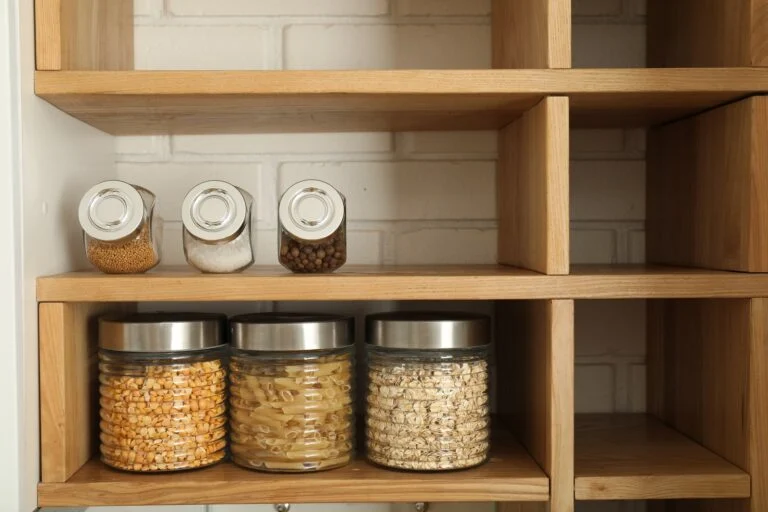
- Rice, or white rice in a pouch.
- Eggs and onions, because they go with almost anything.
- Instant oats and wholemeal bread.
- Ikan bilis, soy sauce and chilli sauce.
- A few packs of ready meals that need no fridge.
To compare stock options, read the long lasting food guide. If you have just moved, the kitchen essentials checklist also helps.
Tips to keep your monthly food budget on track
- Bring a packed lunch at least three days a week.
- Buy drinking water in large bottles instead of small ones.
- Check supermarket promotions, but only buy what you actually use.
- Avoid grocery shopping when you are hungry.
- Also share bulk buys with housemates.
- Finally, review your notes every Sunday for five minutes.
MakanHubb ready meals for the end of the month
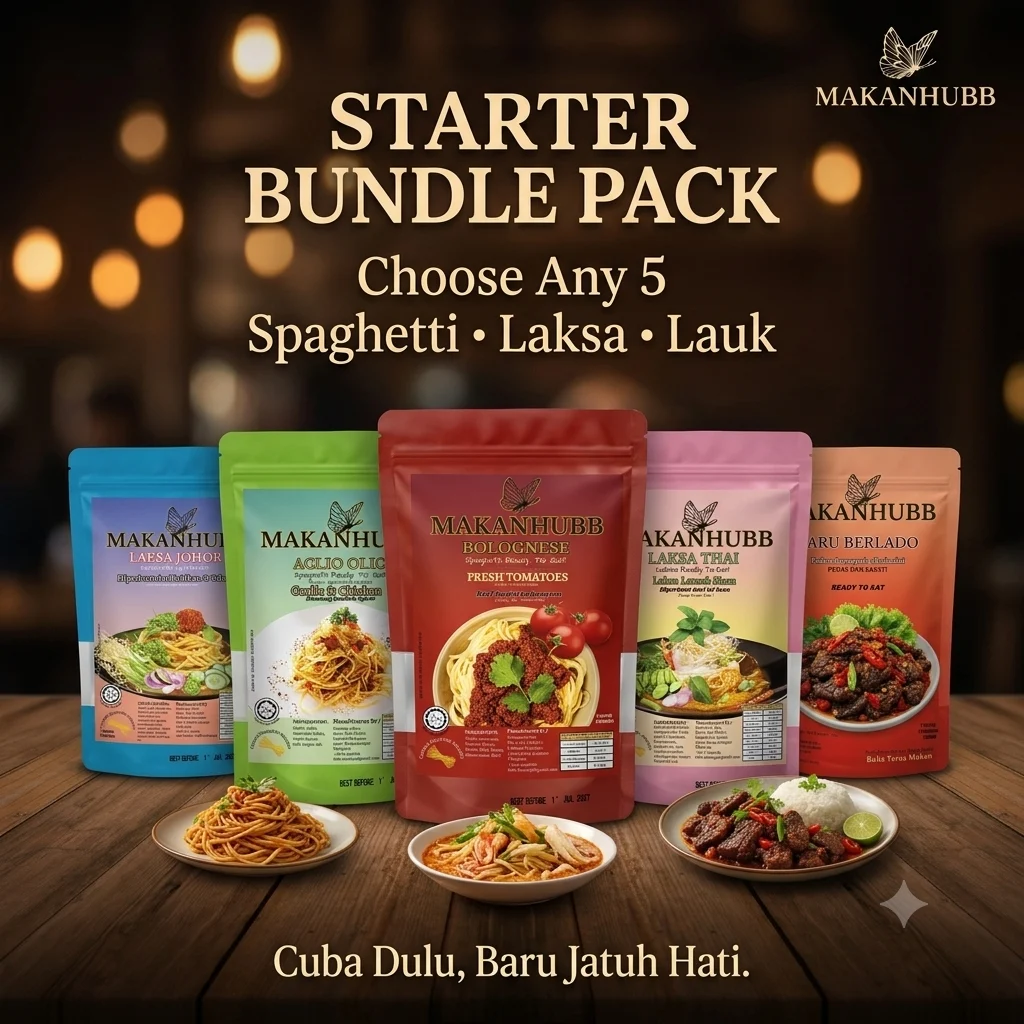
MakanHubb makes dishes, rice and spaghetti in retort pouches. They need no fridge and last about 1 to 2 years before opening. You can eat straight from the pack or warm the pouch in hot water for a few minutes. Prices start from RM12.90 a pack.
FAQ about a monthly food budget
What is a monthly food budget for a single person in KL?
There is no fixed figure. Belanjawanku 2024/2025 estimates RM1,970 a month for all basic expenses for a single person in the Klang Valley. Your food share depends on your lifestyle.
Is cooking always cheaper?
Usually yes, but only if you do not waste ingredients. Buy small amounts and plan your menu so vegetables do not spoil.
What if my income is not fixed?
Use your lowest month as the base for your budget. Then keep the extra from good months as a buffer.
Do I need a budgeting app?
No. A phone note or a simple spreadsheet is enough, as long as you record your spending consistently.
How much food stock should I keep?
Enough for three to five days of simple meals. Also, use the oldest stock first so nothing expires.
Still have questions?
WhatsApp the MakanHubb team at 012-540 0263. We reply during office hours, Monday to Friday.