Quick answer: A basic home first aid kit checklist covers plasters in several sizes, sterile gauze, adhesive tape, roller and triangular bandages, antiseptic wipes, gloves, scissors, tweezers, a thermometer, an instant cold pack, an emergency blanket and a first aid guide. Then add your family’s daily medicines and check expiry dates regularly.
Small cuts, minor burns or sprains can happen at home at any time. A complete first aid kit helps you act quickly while you wait for treatment, if needed. So this guide gives you a general list for the home, how to store it and what to add for a flood emergency bag.
Home first aid kit checklist
We based the list below on the American Red Cross recommendation for a family of four, adapted for home use.
Wound care
| Item | Use |
|---|---|
| Plasters in several sizes | Small cuts and scrapes |
| Sterile gauze pads | Covering larger wounds |
| Absorbent compress dressings | Pressing on a wound that bleeds heavily |
| Cloth adhesive tape | Holding gauze in place |
| Antiseptic wipes | Cleaning the skin around a wound |
| Antibiotic ointment | Ask a pharmacist first |
Bandages and support
- Roller bandages in small and large widths
- Triangular bandages for an arm sling
- An instant cold pack for swelling or sprains
Tools for your first aid kit checklist
- Small scissors and tweezers
- Non-latex gloves, at least two pairs
- A digital thermometer, not glass or mercury
- A breathing barrier with a one-way valve
- An emergency blanket
- A first aid booklet or card
Medicines
Keep the medicines your family commonly uses, such as fever and pain relief, itch cream or antihistamines. However, the right type and dose depend on age and health. Therefore, ask a doctor or pharmacist, especially for children, pregnant women and elderly members.
Keep daily prescription medicines, such as those for high blood pressure or diabetes, separately in their original labelled packs. Also write each family member’s medicines and allergies on a sheet of paper.
How to store a first aid kit
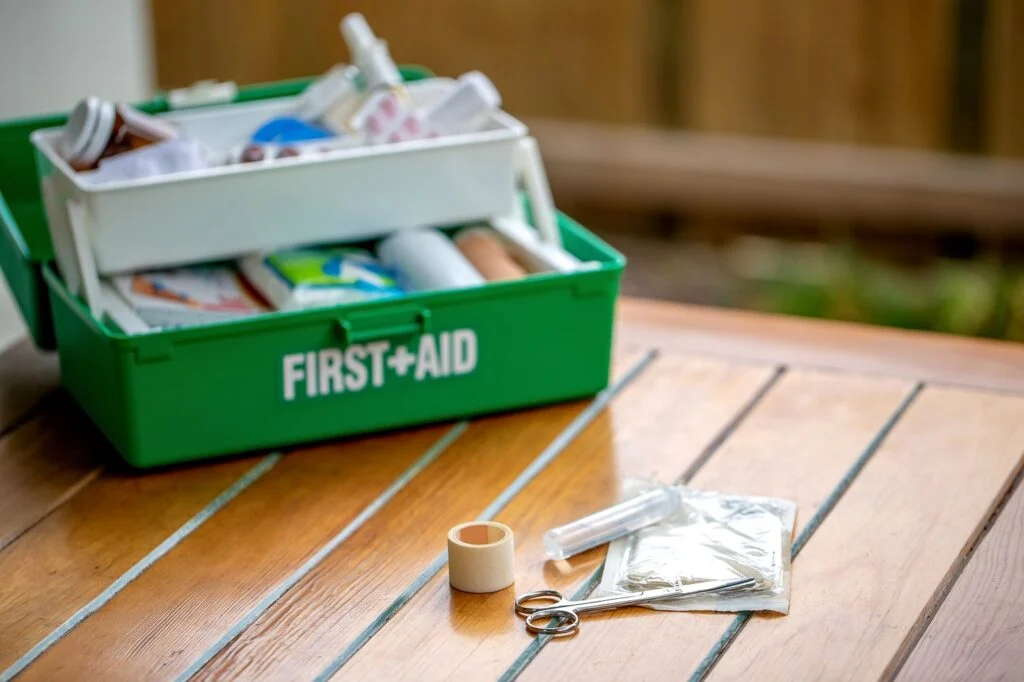
- Pick a sturdy box that closes tightly and is easy to carry.
- Keep it where adults can reach it easily but young children cannot.
- Avoid damp bathrooms, because medicines and dressings spoil faster there.
- Tell everyone at home where the kit is.
Besides the kit at home, keep a small one in the car. It helps on long drives or picnics. However, a car parked in the sun gets very hot, and some medicines spoil at high temperatures. So check the storage instructions on each medicine box and keep important medicines at home if needed.
Check your first aid kit checklist regularly
Items run out or expire without anyone noticing. For this reason, set a schedule, for example at the start of every rainy season. Then replace anything you used and dispose of expired medicines safely.
Also test the thermometer battery and make sure the cold pack does not leak. Old plasters may lose their stickiness too.
Adjust the kit to your family
Every family is different. So add to the basic list based on who lives at home.
Families with babies and children
Add a thermometer suitable for babies, fun plasters that look less scary, and a needle-free syringe for liquid medicine. In addition, keep the number of your health clinic or paediatrician inside the kit.
Families with elderly members or chronic patients
Include a copy of the medicine list, hospital appointment cards and any devices they use, such as a glucose meter or blood pressure monitor. Also keep spare glasses or hearing aid batteries if needed.
Common mistakes
- Buying a ready kit but never opening it to see what is inside.
- Keeping medicines without labels or in other containers.
- Putting the kit so high that it is hard to reach in an emergency.
- Forgetting to replace items after using them.
First aid kit checklist for a flood bag
During a flood, you may need to stay at a relief centre for a few days. As a result, pack a small version of your first aid kit in a waterproof bag. Then add these items:
- Daily medicines for at least a week, with a copy of the prescription
- Mosquito repellent
- Face masks and hand sanitiser
- Closed shoes to avoid cuts when walking through mud
You can find the full bag list in our flood emergency kit guide. For the full steps before and after a flood, read our flood preparedness guide. Also, if you need to evacuate, see our flood relief centre guide.
Food to keep with your emergency bag
Most people keep the first aid kit next to the emergency bag. That bag also needs food that needs no cooking. Retort pouch meals need no fridge, keep for 1 to 2 years before opening and you can eat them straight from the pack.
MakanHubb dishes start from RM12.90 a pack. For example, pick a few dishes and a White Rice pouch to sit beside your first aid kit. To learn more, read our guide to long lasting food.
First aid tips
- Join a basic first aid course run by a recognised body.
- Teach children the emergency number 999 and how to give your home address.
- For deep cuts, bleeding that will not stop, breathing trouble or head injuries, get medical help right away.
FAQ about the first aid kit checklist
What are the most basic items for a home first aid kit?
Plasters, sterile gauze, adhesive tape, bandages, antiseptic wipes, gloves, scissors and a thermometer. Then add your family’s daily medicines as a pharmacist advises.
Where should I keep the first aid kit?
In a dry place that adults can reach easily, away from young children. Also avoid damp bathrooms.
How often should I check the kit?
Check it regularly, for example at the start of every rainy season. Then replace items you used or that have expired.
Should I buy a ready kit or make my own?
Either works. A ready kit is an easy start, but you should still add medicines and items your family needs.
Which medicines should I keep for children?
The type and dose of children’s medicine depend on age and weight. So ask a doctor or pharmacist before you stock any.
Still have questions?
WhatsApp the MakanHubb team at 012-540 0263. We reply during office hours, Monday to Friday.