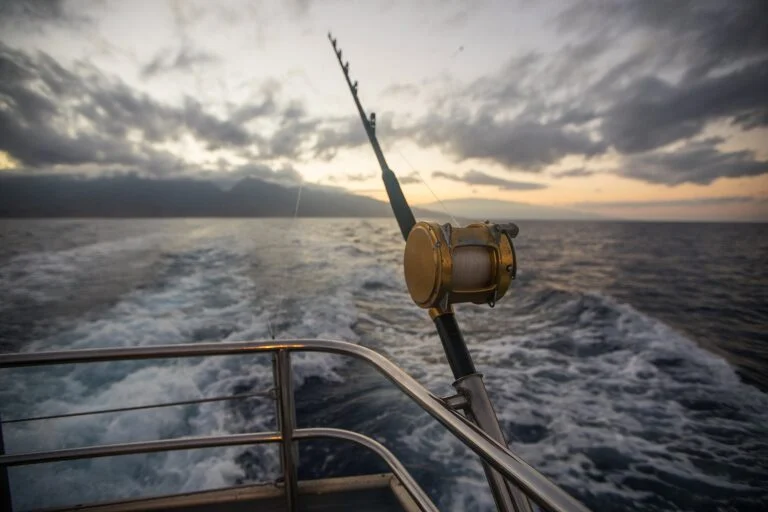
Quick answer: Deep sea fishing in Malaysia means fishing far from shore in deeper water, on a day trip or overnight. Choose a licensed boat operator with a certified skipper, bring heavier gear, wear a life jacket, avoid the monsoon season and pack enough food for every meal.
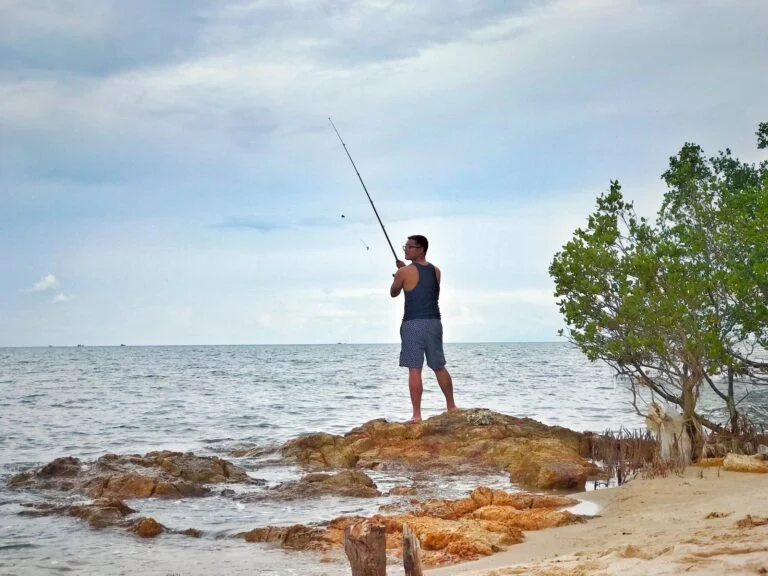
For many anglers, a trip out to the open sea is the next step after fishing from a jetty or beach. The fish are bigger, but the preparation is more involved. This guide to deep sea fishing in Malaysia explains the trip types, how to choose a boat, basic gear, safety and food for your first trip.
What deep sea fishing in Malaysia involves
The term usually refers to fishing from a boat far from shore, around islands, unjam (fish aggregating structures) or reef areas. The journey to the spot can take a few hours. So most trips start before dawn or at night.
Costs and trip length differ by operator, location and type of boat. Compare a few operators and ask what the fee covers, such as bait, ice, food and rod rental. The answers help you plan what to bring yourself.
In addition, the number of anglers on one boat affects comfort. An overcrowded boat makes it hard to cast and move around safely.
Day trips
The boat leaves early in the morning and returns the same afternoon. This suits beginners because it is short and lets you find out whether you can handle long hours at sea.
Overnight trips
Overnight or multi-day trips take you further out. You will sleep on the boat, so ask the skipper about facilities such as shade, a toilet and a stove.
Choosing a boat for deep sea fishing in Malaysia
The boat is your most important decision. The Department of Fisheries e-Rekreasi portal states that vessels carrying passengers for recreational sea fishing need a permission letter from the Marine Department Malaysia (Jabatan Laut). According to a Utusan Malaysia report, skippers must hold a competency certificate, and insurance is needed before a licence can be applied for.
Before paying a deposit, ask the operator about their licence, insurance, maximum number of anglers and the life jackets provided. Serious operators usually do not mind answering.
Gear for deep sea fishing in Malaysia
Deeper water and bigger fish need sturdier gear than shore fishing. Ask the skipper which technique is common at the spot, as it decides what you should bring.
Jigging
This technique uses a metal lure (jig) that is lifted and dropped repeatedly. It needs a dedicated rod and a reel that can handle strong pulls.
Bottom fishing
Bait is sent down to the seabed with a heavy sinker. This suits bottom fish such as grouper (kerapu) and red snapper (merah). Bring sinkers in a few weights, as currents offshore keep changing.
For the full list including personal and safety items, see our sea fishing checklist.
Staying safe far from land
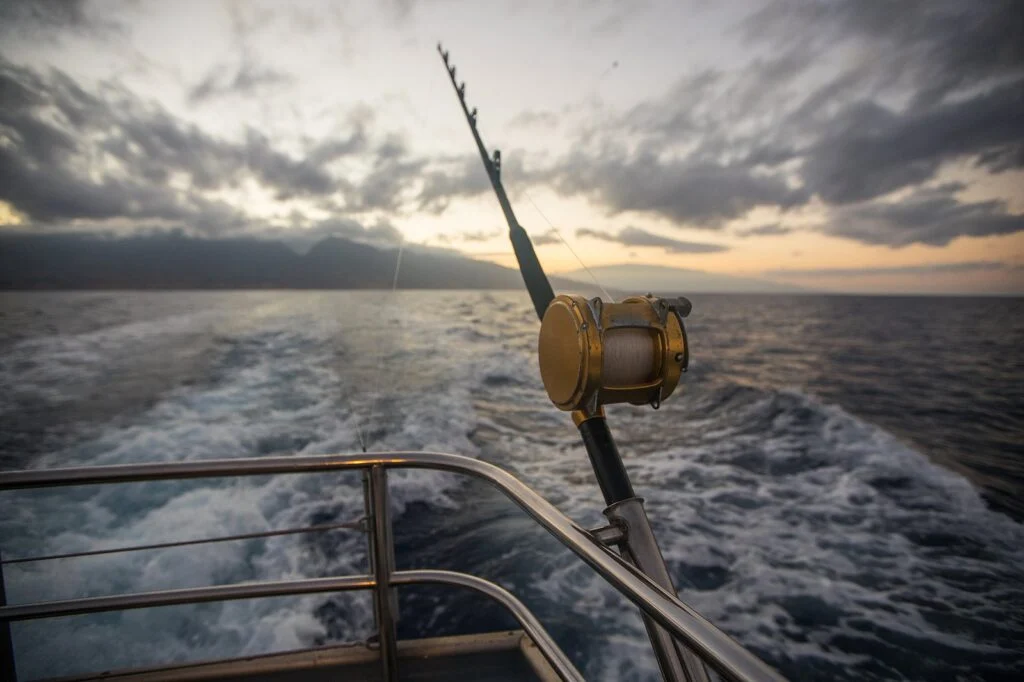
Far from shore, help takes time to arrive. Wear a life jacket for the whole trip and follow the skipper’s instructions. Keep your phone in a waterproof bag, and tell family the boat name and expected return time.
Weather is another major factor. On the east coast of Peninsular Malaysia, the Northeast Monsoon usually runs from November to March. According to MetMalaysia, the heaviest rain in the east coast states falls in November, December and January. Check the marine forecast before leaving, and accept the skipper’s decision if a trip is cancelled.
Rules and marine park areas
The Department of Fisheries offers recreational fishing registration through the e-Rekreasi app for anglers at sea and on the coast. Check directly with the department for current requirements.
Also, fishing inside a gazetted marine park is an offence under the Fisheries Act 1985. Many islands popular for offshore trips are inside or near marine parks, so make sure your skipper fishes outside the boundaries.
Food for a deep sea fishing trip
An overnight trip means eating several times on the boat. Some boats provide meals and some do not. Ask in advance so you know how much food to bring.
The best food needs no fridge, handles heat and does not spill easily. MakanHubb retort dishes last 1 to 2 years before opening. If the boat has a stove, warm the pouch in hot water for a few minutes. If not, eat straight from the pack. Also read about retort food shelf life and our list of long lasting food for more ideas.
Prices start from RM12.90 a pack. The full range is in the MakanHubb shop. Take every empty pouch back to shore and never throw rubbish into the sea.
Tips for your first trip
A few habits make a first experience of deep sea fishing in Malaysia far more enjoyable.
- Start with a day trip. It is an easy way to test whether you get seasick.
- Talk to a pharmacist. Ask about seasickness medicine and when to take it.
- Rent gear first. Most operators rent out rods, so there is no need to buy an expensive set for your first trip.
- Bring extra water. Sun and sea wind make you thirsty quickly.
- Release fish you do not need. The Department of Fisheries encourages catch and release.
FAQ about deep sea fishing in Malaysia
How is deep sea fishing different from shore fishing?
Deep sea fishing is done from a boat far from shore, in deeper water. It needs heavier gear, a longer journey and more careful safety preparation.
Is it suitable for beginners?
Yes, especially if you start with a day trip with an experienced skipper. Tell the skipper it is your first trip so they can guide you.
How do I know a boat is licensed?
Ask the operator about the Marine Department permission letter, the skipper’s competency certificate and insurance. If the answers are unclear, consider another operator.
Which season should I avoid on the east coast?
The Northeast Monsoon, usually November to March. According to MetMalaysia, the heaviest rain falls from November to January, and many trips are cancelled because of rough seas.
How much food should I bring for an overnight trip?
Count the number of meals during the trip and add one spare. Ask the skipper whether food is provided on board.
Still have questions?
WhatsApp the MakanHubb team at 012-540 0263. We reply during office hours, Monday to Friday.